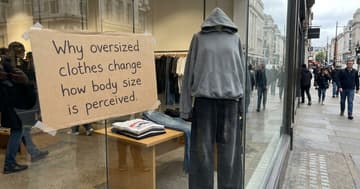
Human vision relies on specific environmental cues to interpret the physical dimensions of objects and people. When observing the human form, the brain quickly scans for anchor points such as the shoulders, waist, and hips to establish a mental map. However, the use of loose garments disrupts this standard calculation. Understanding why clothing fit matters more than body type is essential for grasping how visual perception of body size becomes skewed. When these anatomical markers are obscured, the brain struggles to distinguish where the fabric ends and the body begins.
Visual Heuristics and Size Estimation
The brain uses visual heuristics to make rapid judgments about volume and mass. In the absence of clear biological lines, the eye often defaults to the outer boundary of the silhouette. This process is problematic because the mind tends to fill in gaps with assumed bulk. Research suggests that why loose-fitting clothes make people look bigger stems from this tendency to equate the maximum width of the garment with the actual width of the person.
Silhouette Reading and Information Gaps
Silhouette reading is the cognitive process of interpreting an outline to determine the shape of the object within. Oversized garments create a rectangular or boxy frame that masks the natural taper of the human figure. This lack of information forces the observer to rely on the widest point of the fabric as the primary reference. Since the brain cannot see the underlying structure, it often overestimates the physical space the body occupies.
The Role of Missing Anatomical Data
When key joints like the elbows or knees are hidden, the brain loses the ability to calculate limb length and proportions. This leads to a flattened perspective where three-dimensional depth is compromised. Insights into why oversized clothes change body perception highlight how the disappearance of these visual anchors results in a misinterpretation of scale. The result is a generic estimation of size rather than an accurate reading of the individual.
The misjudgment of body size in oversized clothing is a byproduct of how the human visual system processes spatial data. By replacing natural anatomical curves with a continuous fabric surface, these garments remove the necessary data points for accurate estimation. The brain treats the outer edge of the clothing as the final boundary of the body itself. This phenomenon demonstrates that perception is heavily dependent on visible outlines and that missing information inevitably leads to overestimation of physical volume.