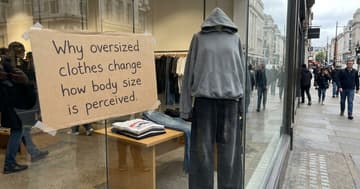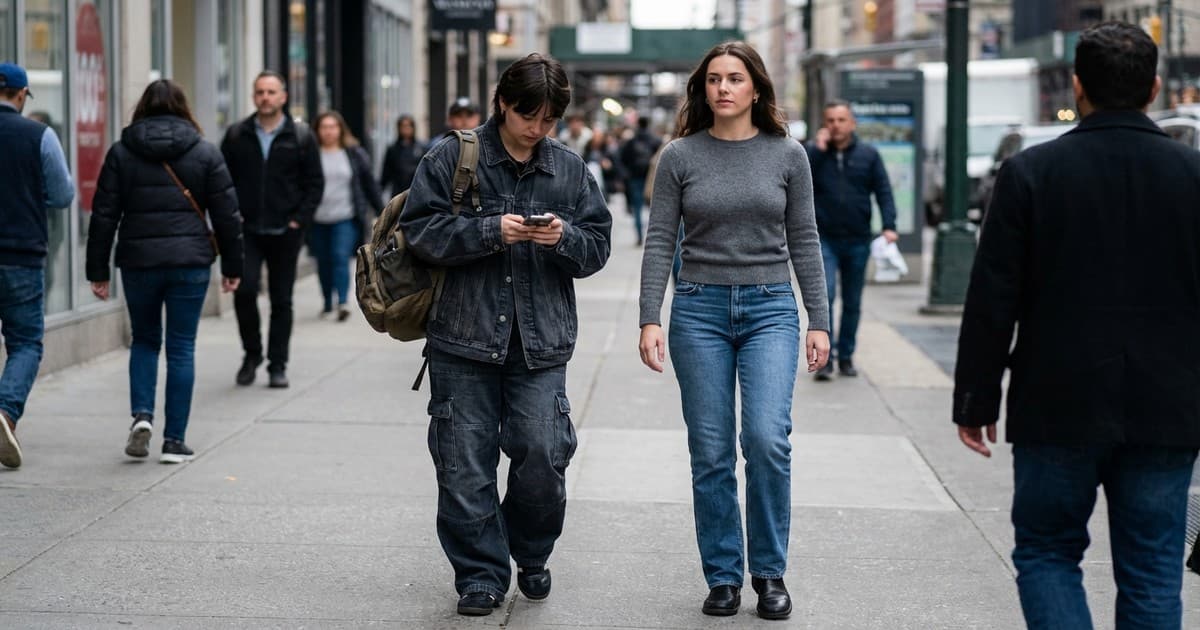
Vertical continuity defines how the human brain processes height through a single uninterrupted line. When fabric deviates from the natural frame of the person wearing it, the eye struggles to establish a baseline for measurement. Understanding why clothing fit matters more than body type is essential for recognizing how vertical continuity functions within visual perception. The presence of excess material creates horizontal distractions that pull the gaze outward rather than upward.
Vertical Lines and Continuity
The visual system relies on clear landmarks to estimate the length of an object or person. Baggy garments often obscure the starting and ending points of the legs and torso. This lack of definition forces the brain to average the total volume of the silhouette. Because why loose-fitting clothes make people look bigger relates to spatial occupation, the expansion of width occurs at the direct expense of perceived verticality.
Proportion Breaks and Segmentation
Segmentation occurs when heavy folds of fabric create distinct horizontal breaks in the visual field. These breaks function as stop signs for the observer's eye. When fabric pools around the ankles or bunches at the waist, it divides the frame into smaller sections. Research into why oversized clothes change body perception indicates that more segments result in a shorter overall estimation of height. Each fold effectively subtracts from the appearance of a long and fluid line.
Height Perception and Physical Frame
Height perception is influenced by the ratio of limb length to total body width. When a garment extends past the natural shoulder or obscures the waist, it alters the mathematical proportions seen by others. The brain interprets a wide silhouette as being closer to the ground. This illusion happens because the eyes must travel more distance horizontally. This movement signals a different scale than a streamlined profile would provide.
Analytical Conclusions on Stature
The relationship between fabric volume and visual perception is a matter of geometry. Excess material interrupts the vertical flow and introduces horizontal anchors that segment the frame. By observing how light and shadow interact with draped fabric, it becomes clear that height is not just a measurement. It is an interpretation of space and continuity. Baggy clothing inherently disrupts these signals and leads to a reduced estimation of stature through visual interference.