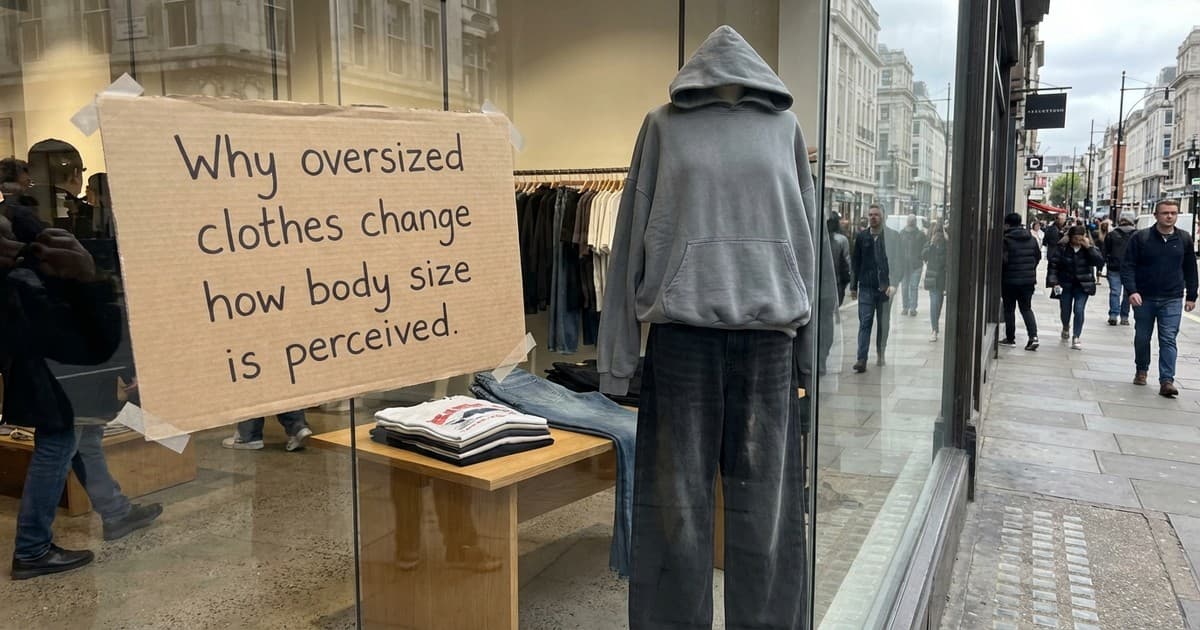
The visual interpretation of the human form is rarely objective. It depends on the relationship between fabric and skin. When individuals wear garments that exceed their dimensions, the brain must resolve the lack of borders. Understanding why clothing fit matters more than body type is essential to decoding this. This shift in body size perception occurs as the observer projects a mental map onto the garment instead of the anatomy beneath.
How Context Reshapes Body Reading
Contextual cues play a major role in how the brain calculates volume. When a silhouette is obscured, the mind uses the garment's edges as the primary reference point. This creates a framing effect where the fabric becomes the proxy for the person. Research into the visual perception of body size in oversized clothing suggests the brain often misjudges mass based on how fabric moves during interaction.
Why Perception Varies Across Situations
Perception fluctuates across situations because observers rely on social heuristics to interpret style. In professional settings, loose garments might create a sense of presence. In casual settings, they might prioritize comfort. Even though how baggy clothing alters height perception is a separate process, the overall reading of a person's scale remains tied to these social expectations.
Why the Effect Persists
These perceptual shifts persist due to a cognitive tendency called the filling-in effect. When the eye cannot find a shoulder line or waist, it creates a simplified version of the body to process visual data. This mental model uses the garment's outer volume as its primary data point. The observer sees a shape defined by the negative space between the skin and the textile surface rather than the actual physical form beneath.
Conclusion
Body size perception is a dynamic interaction between the viewer and the viewed. Oversized garments disrupt the standard cues used to measure human proportions. This creates a fluid social reading where the body is no longer a fixed entity but a canvas for visual framing. By shifting the focus from anatomy to volume, these clothes change how we recognize physical presence. This understanding highlights the power of layers in shaping our social reality.