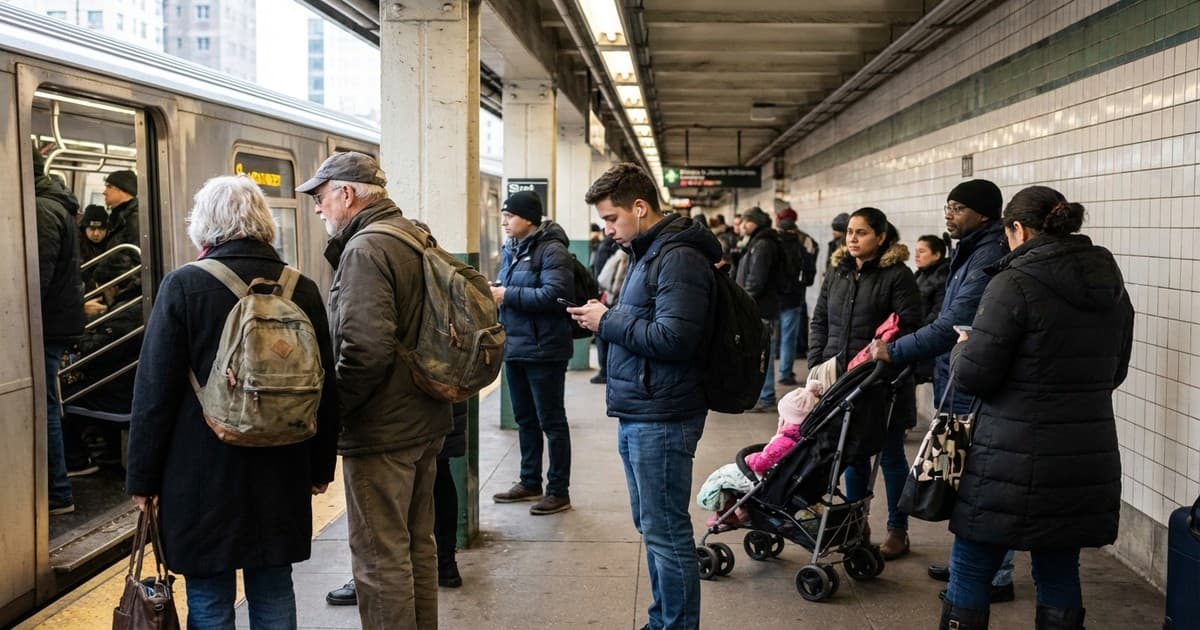
Anyone who has navigated a silent Tokyo platform and then Cairo's traffic knows that movement is about more than distance. While globalization has standardized airports, everyday travel experiences vary due to infrastructure, cultural attitudes toward time, and economic priorities. These differences are the result of long-standing planning and norms that define how a society functions and interacts.
When we cross a border, we enter a different philosophy of movement. Understanding these drivers explains why a short trip can feel like a seamless transition in one city and a chaotic test in another. It is this intersection of the physical and the social that makes the daily commute a unique window into a nation's priorities and the lives of its citizens.
The silent hand of urban infrastructure
Infrastructure acts as the skeleton of any travel experience. In much of Western Europe and East Asia, massive public investment has long prioritized rail and high-density transit systems. This creates a predictable, shared rhythm of life where the vehicle is treated as a communal space. Such systems are designed to move thousands of people with surgical precision, minimizing the friction of the daily commute for the average citizen.
In contrast, development in many other regions has historically favored the private automobile. This design choice creates a sense of isolation and individual autonomy that fundamentally changes how a person perceives their journey. Where public transit is an afterthought, the travel experience becomes a private endeavor, often dictated by traffic congestion and the physical separation of residential zones from commercial hubs.
How cultural perceptions of time dictate the journey
Sociologists often distinguish between cultures that view time as linear and those that see it as fluid. In countries like Germany or Japan, punctuality is viewed as a fundamental social contract. A delay is not just an inconvenience; it is a breach of trust. In these environments, the travel experience is defined by efficiency and reliability. The clock is the ultimate arbiter of whether a trip was successful or a failure.
In many Mediterranean or Latin American nations, travel is often more relational than transactional. A bus might wait for a running passenger, or a brief conversation might delay a departure without causing offense. These cultural nuances transform a simple transit trip into a social interaction. In these contexts, the focus is often on the human element of the journey rather than the strict adherence to a pre-set schedule.
The role of social trust and public safety
Safety and social trust play a pivotal role in the quality of local travel. In Scandinavia, high levels of communal trust allow for 'passive' travel where commuters can sleep or use expensive electronics without concern. This level of comfort in public spaces is a direct reflection of a nation’s social cohesion. When citizens feel safe in their environment, the act of traveling becomes a background activity rather than a source of stress.
In regions where economic inequality is sharper, travel often involves a heightened state of awareness or physical barriers. The design of stations, the presence of security, and the behavior of fellow passengers are all shaped by the underlying social climate. The level of ease one feels in a public square or on a subway car is rarely about the vehicle itself; it is about the health of the society that built it.
A reflection of national values
Ultimately, the diversity of these journeys serves as a reminder that geography is more than just terrain. Every train ride or walk to work is a lesson in how a society values its citizens’ time. As we move further into 2026, the gap between high-tech hubs and traditional transport continues to shape our global perspective. Understanding these variances allows us to appreciate that the way we get there tells the real story of a nation.