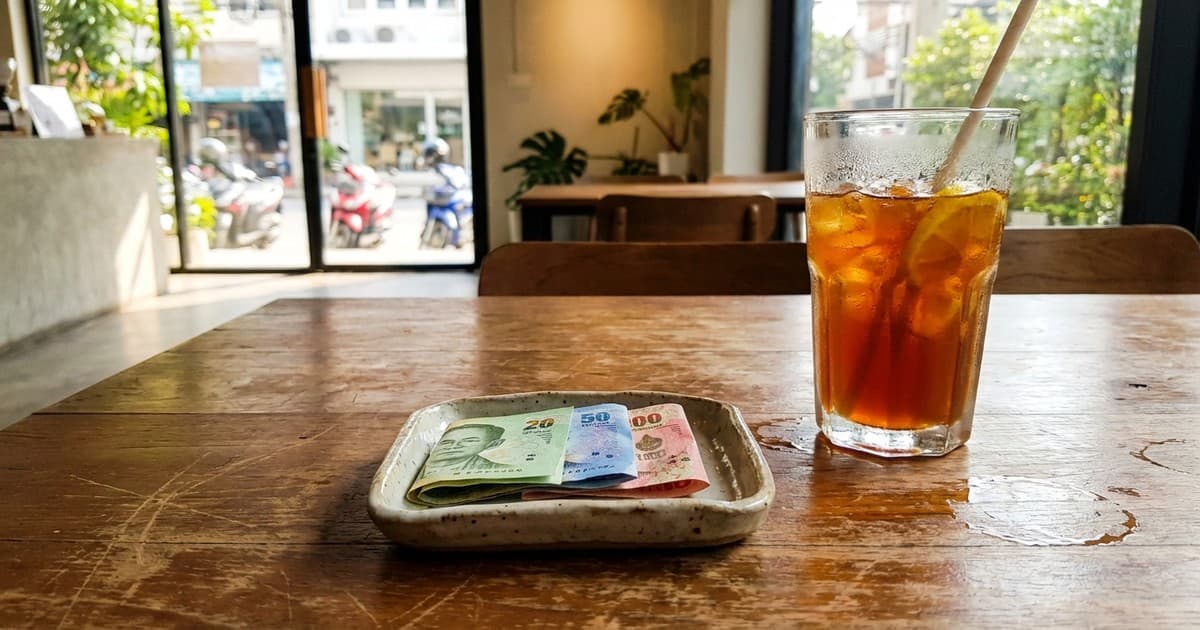
Tipping in Thailand has long been a source of mild confusion for travelers. Unlike the rigid structure of North America or the service-included tradition of Europe, Thai gratuity exists in a flexible middle ground. While not strictly mandatory, it is increasingly expected in urban centers and luxury settings.
Navigating this landscape requires a balance between local customs and the rising standards of international tourism. Understanding these nuances ensures a smoother experience for any visitor. By learning the subtle cues of the local service industry, guests can feel confident in their social interactions.
Distinguishing the service charge from the tip
In many high-end restaurants and hotels, a 10% service charge is already added to the bill. This is legally distinct from a voluntary tip. While the money is intended to be shared among staff, some guests choose to leave an additional small amount in cash to ensure it reaches the server directly.
If the bill includes a service charge, you are under no social obligation to tip further, though rounding up the change remains a common gesture. For instance, leaving a 20-baht note on a 480-baht bill is a widely accepted practice. It acknowledges good service without setting unsustainable expectations for the local economy.
The etiquette of street food and casual stalls
Street food is the backbone of the Thai culinary experience, and tipping here is virtually non-existent. Most vendors expect the exact amount or will provide precise change. Attempting to tip at a busy roadside stall can sometimes cause confusion or be politely refused, as the focus is on speed and volume.
In these settings, showing your appreciation through a simple thank you is often more appropriate than offering extra cash. If you truly want to show gratitude, returning as a repeat customer or bringing friends is the most valued gesture a vendor can receive.
Navigating transportation and taxis
For taxi drivers, the general rule is to round up to the nearest ten or twenty baht. If a fare is 82 baht, giving the driver 90 or 100 baht is standard. This simplifies the transaction and accounts for the difficult traffic conditions in cities like Bangkok.
For ride-hailing apps, which have become the dominant mode of transport for many, the interface provides a digital tipping option. While optional, a tip of 20 to 50 baht for a long or particularly smooth journey is well-regarded by drivers who rely on high ratings and fuel efficiency.
Massage and spa services
The rules change slightly when it comes to personal services like massages. Because practitioners often receive a small percentage of the total fee, a direct cash tip is standard. A gesture of 50 to 100 baht for a one-hour massage is typical and deeply appreciated by the staff.
Handing this tip directly to your therapist at the end of the session ensures they receive the full benefit of your generosity. In high-end hotel spas, where prices are significantly higher, the 100-baht threshold is often considered the baseline for excellent service.
The philosophy of nam jai
Tipping in Thailand is ultimately about discretion and the quality of the interaction. It is often linked to the concept of "nam jai," which translates to spontaneous generosity or water from the heart. By following these guidelines, travelers can respect local norms while acknowledging the hard work of those in service.
Whether you are in a bustling city or a quiet beach town, a thoughtful approach to gratuity helps maintain a positive relationship between visitors and the local community. It reflects an appreciation for the hospitality that defines the Thai travel experience today.