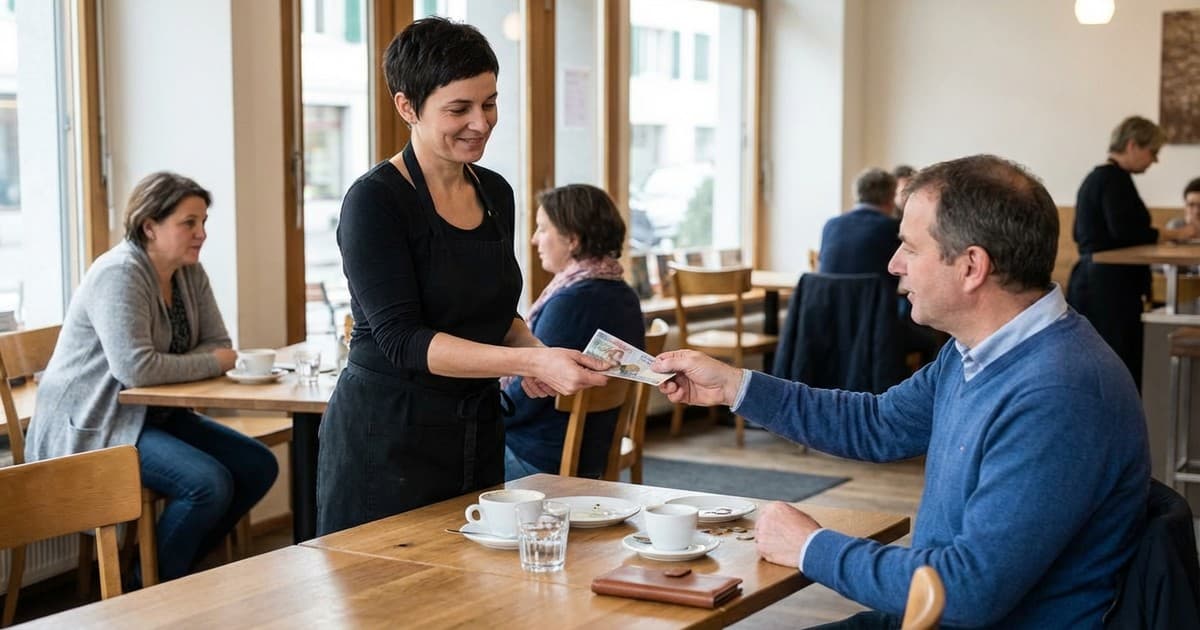
In the landscape of international travel, few things cause as much hesitation as the final moments of a meal. While many countries rely on gratuities to bolster low service wages, tipping in Switzerland functions on an entirely different set of economic principles. Swiss law has mandated that service charges be included in prices since the 1970s. For those navigating global tipping rules confusing visitors today, the Swiss model remains a pillar of transparency.
This legal framework creates an environment where the price on the menu is the final price you are expected to pay. Understanding this context is vital because it explains why local staff never demand a large percentage of the bill. Unlike neighboring nations where customs vary, travelers often find that tipping in Europe tourist mistakes guide principles apply here with a specific focus on discretion and modest gestures. In Swiss culture, a tip is a genuine Trinkgeld or pourboire — a small sum for a drink — rather than a salary supplement.
The etiquette of rounding up in Swiss restaurants
In most casual dining scenarios, the standard practice is simply to round the bill up to the nearest five or ten francs. If a lunch costs forty-seven francs, leaving fifty is considered a polite and sufficient gesture. For more formal evening dining or exceptional service, a tip of five to ten percent is appreciated but never feels like a requirement. Service professionals in Zurich or Geneva are respected experts who do not view a missing tip as an insult.
Gratuities for transport and hotel staff
Transport and hospitality follow a similar logic of modest appreciation. When taking a taxi across a city like Basel, rounding up the fare is the most common approach among locals. For hotel porters who assist with heavy luggage, a small amount such as one or two francs per bag is customary. At high-end resorts, you might leave a small envelope for housekeeping at the end of a stay, though even this is far from a universal expectation in the alpine nation.
Navigating the financial side of Swiss hospitality requires a shift in mindset for those used to high-pressure environments. The clarity of the service compris system ensures that the relationship between the guest and the provider remains professional rather than transactional. By focusing on rounding up or offering a small percentage for standout care, you align with local norms. This approach respects the high standards of Swiss service and the value provided.