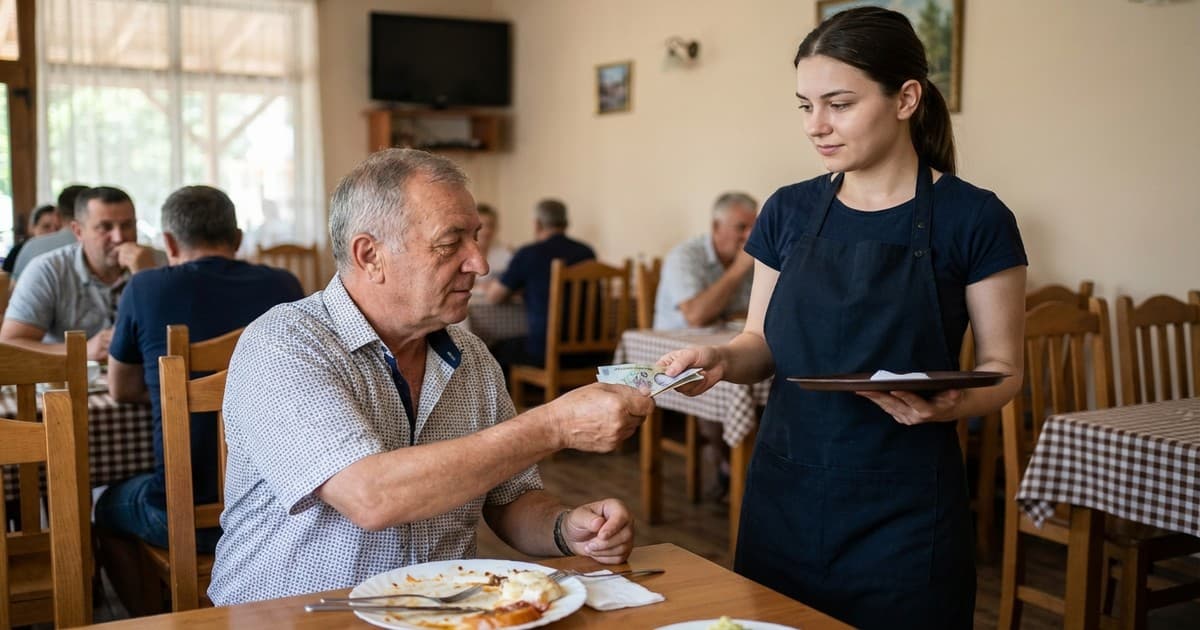
Romanian culture values hospitality, but the rules for gratuity have shifted recently. While once an informal "round up" culture, the country now has formalized fiscal rules regarding service. Visitors should know that a tip of 10% is the standard expectation in most sit-down dining establishments across the country. Understanding these nuances helps avoid awkwardness at the end of a meal in Bucharest or Cluj.
The new legal landscape for gratuities
Since 2023, Romania has integrated tips into its fiscal system. This means when you ask for the bill at a restaurant, you will often see a section where you can choose a percentage—usually 0%, 5%, 10%, or 15%. This amount is then printed on the tax receipt. This change has made tipping more transparent for both the tax authorities and the service staff.
Even though the tip is now technically "on the bill," it remains optional by law. You are not legally required to pay a service charge if the service was subpar. However, most locals continue to tip around 10% for good service. If you are paying by card, the waiter will usually ask you to select the amount on the POS terminal before processing the payment.
Tipping beyond the restaurant table
While restaurants have a formalized system, other sectors still rely on cash gratuities. In taxis or rideshares like Bolt and Uber, rounding up the fare is the most common practice. For instance, if a ride costs 18 lei, giving the driver 20 lei is seen as polite. Large tips are not expected in transport, but small gestures are appreciated given the rising fuel costs.
In hotels, the norms are more relaxed than in the United States or Western Europe. Tipping the bellhop or cleaning staff is not mandatory but welcomed. A few lei for luggage assistance or daily housekeeping is considered generous. Most travelers carry small denominations specifically for these interactions, as many service workers earn modest base salaries.
Coffee culture and quick service
In "to-go" coffee shops and fast-food counters, you will frequently find a tip jar near the register. There is no social pressure to contribute here, but dropping your small change is common. In more upscale specialty cafes where table service is provided, the 10% rule generally applies. Romanians take their coffee culture seriously, and baristas are highly regarded.
A guide for modern travelers
Navigating tipping in Romania is largely about observing the context of the service provided. While the 10% benchmark is a safe rule of thumb for dining, the move toward digital payments and fiscal receipts has simplified the process for tourists. By understanding these local customs and the recent legal changes, travelers can ensure their gratitude is delivered fairly.