In the Kingdom, tipping in Morocco is more than just a reward; it is an integral part of the social and economic fabric. Whether you are sipping tea in a souk or navigating the Medina, knowing how much to give is essential for a smooth journey. While not mandatory, gratuities supplement the modest wages of service workers.
This guide explores the unspoken rules of the practice, helping travelers navigate expectations from high-end riads to local street stalls with confidence. By understanding these cultural nuances, visitors can move through the country with ease while supporting the local economy in a meaningful way.
Daily dining and café culture
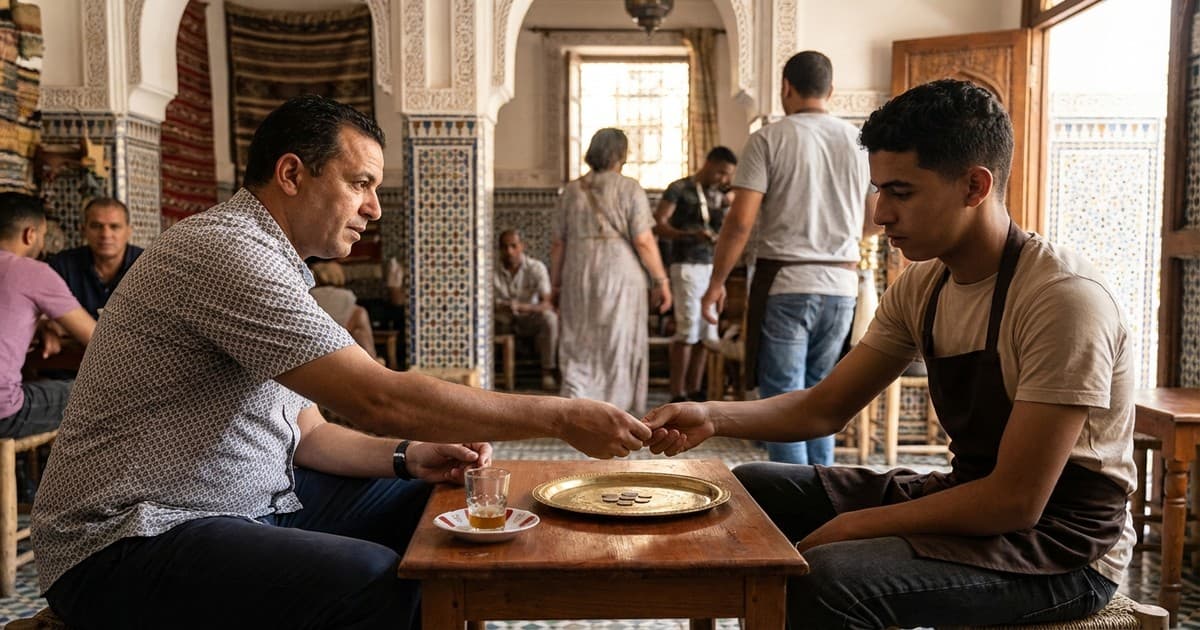
For many travelers, the first encounter with Moroccan tipping culture happens at a street-side café. A modest gratuity is customary when ordering a "nous-nous" or a fresh orange juice. Usually, rounding up the bill or leaving a few coins—around 2 to 5 dirhams—is sufficient. In casual eateries, leaving 5 to 10 percent of the total is a gracious gesture. It reflects the local pace of life and social norms.
In upscale restaurants in cities like Casablanca or Rabat, expectations shift slightly. While a service charge is occasionally included, it is still standard practice to leave an additional 10 percent directly for the waiter. This ensures the person who served you receives the benefit. Large groups should consider a slightly higher percentage, especially if the service involved complex traditional Moroccan hospitality.
Navigating transportation and taxis
Tipping taxi drivers in Morocco depends largely on the type of vehicle. For "petit taxis" that operate within city limits, most locals simply round up to the nearest five or ten dirhams. If the meter reads 17 dirhams, giving 20 is common. However, for "grand taxis" or private transfers, a tip of 20 to 50 dirhams is appreciated. Understanding tipping etiquette Morocco style ensures a smoother interaction with local transport providers.
Tour guides and hotel services
Navigating the labyrinthine medinas often requires the help of a professional guide. For a half-day tour, a tip of 100 to 150 dirhams is standard, while a full day might warrant 200 to 300 dirhams. If you are part of a larger group tour, individual contributions of 50 dirhams are typical. These tips are vital, as many guides rely heavily on gratuities. Always ensure your guide is official to avoid complications.
Within your accommodation, small gestures go a long way. Porters who carry bags generally receive 10 to 20 dirhams. For housekeeping, leaving a similar amount per day is a kind way to show appreciation for their labor. In traditional riads, you might choose to leave a lump sum in a collective tip box at the end of your stay. This ensures the tip is shared among the entire team, including those behind the scenes.
Closing thoughts on local customs
Ultimately, tipping in Morocco is about acknowledging the human connection behind every service. While the amounts may seem small to many foreign visitors, they carry significant weight for local workers and their families. Carrying a supply of Moroccan dirham coins and notes is the most practical way to stay prepared. By following these cultural norms, you ensure better service and contribute positively to the community.