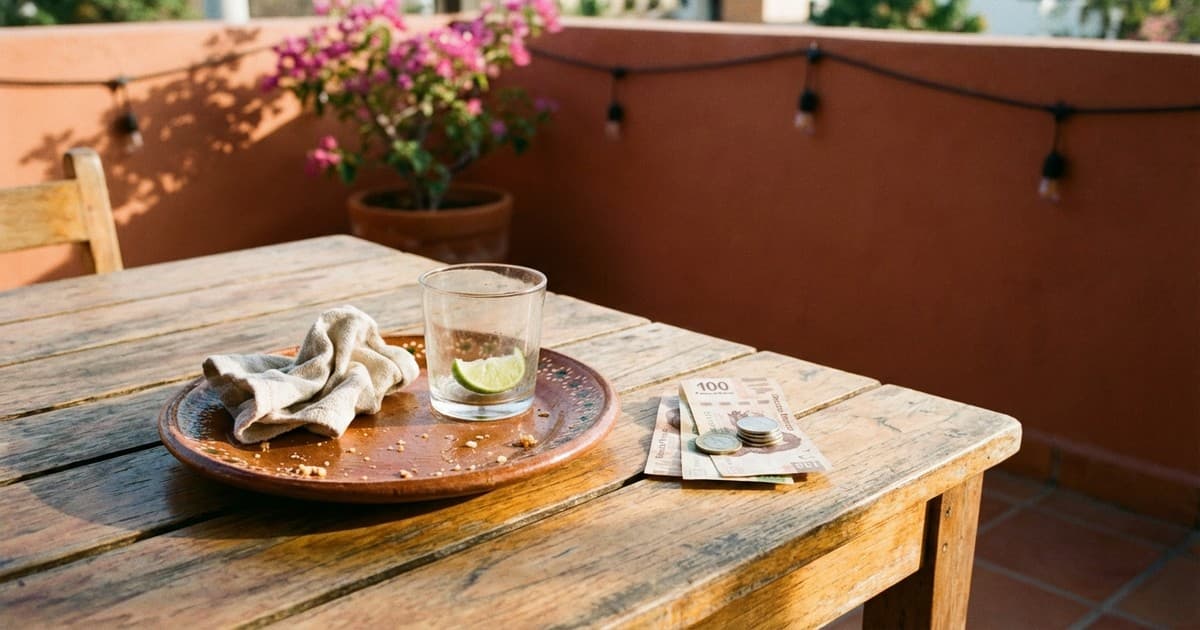
Navigating the social nuances of travel often begins at the end of a meal. In Mexico, the culture of the "propina" is deeply woven into the service industry, acting as a crucial supplement to modest base wages. Understanding tipping in Mexico requires more than just a calculator; it demands an awareness of local expectations and legal rights. While not legally mandatory, a gratuity is a standard gesture of appreciation.
This practice supports the livelihoods of millions of workers across the country. Today, visitors will find that while service standards remain high, the economic landscape makes these contributions more significant than ever. Whether you are at a beachside taco stand or a formal dining room in the capital, knowing how much to leave ensures a respectful and smooth interaction with the professionals who make your visit memorable.
Dining and the etiquette of the propina
When dining out, the standard expectation for service is a tip ranging between 10% and 15% of the total bill. In high-end establishments or major tourist hubs like Cancún and Mexico City, 15% has increasingly become the baseline for attentive service. It is important to check your bill before paying, as some restaurants may include a suggested amount for your convenience. However, legally, a tip cannot be forced or automatically added.
If you notice a "servicio" charge already included on the receipt, you are not obligated to pay more, though many patrons still add a small amount for exceptional service. Under Mexican law, specifically enforced by the consumer protection agency Profeco, the tip remains entirely voluntary. If a restaurant insists on a mandatory gratuity, they are in violation of local regulations, and consumers have the right to challenge the charge.
Beyond the restaurant: Transportation and tours
For those exploring the country’s landmarks, tipping tour guides is a common practice that rewards their local knowledge. A daily rate of 100 to 200 pesos per person is generally appropriate for a full-day excursion. Taxi drivers, conversely, do not typically expect tips unless they provide extra assistance with heavy luggage. If you are using ride-sharing apps, the platform usually provides a clear interface for adding a gratuity.
Private drivers and airport shuttle operators should be treated similarly to tour guides. A small gesture of 50 to 100 pesos is appreciated for a safe and timely transfer. In recent years, the rise of digital payments has made this easier, but carrying small denominations of cash remains the most reliable way to ensure the worker receives the funds immediately. This direct support is highly valued in the local Mexican tipping culture.
Lodging and essential informal services
In the hospitality sector, small but frequent tips are the norm for various staff members. Bellhops should receive roughly 20 to 50 pesos per bag, depending on the level of service and the category of the hotel. Housekeeping staff are often overlooked, but leaving 20 to 50 pesos per night is a significant gesture for those maintaining your room. It is best to leave this daily on the desk to ensure the person working that day receives it.
Mexico also has a unique layer of informal service workers, such as grocery baggers and gas station attendants. Many of these individuals, particularly the elderly "cerillos" at supermarkets, rely almost entirely on tips for their income. Handing over 5 to 10 pesos is standard for bagging, while 10 to 20 pesos is appropriate for an attendant who washes your windshield. These small amounts are minor for travelers but essential for the providers.
Mastering the etiquette of tipping ensures a smoother experience and fosters mutual respect between visitors and locals. By carrying small denominations of pesos, you can easily navigate these daily interactions without hesitation. While the percentages may seem familiar, the impact of these tips is profound. Ultimately, a well-placed propina is a simple way to acknowledge the hard work that defines the country's world-class hospitality.