Luxembourg presents a unique case for travelers accustomed to the high-pressure tipping cultures of North America. As one of the wealthiest nations in Europe, the Grand Duchy operates on a system where professional service is valued and fairly compensated through high base wages. While global tipping rules often vary wildly by continent, this tiny nation maintains a balanced approach. Understanding tipping in Luxembourg requires looking past the bill to see a culture that prizes discretion over display. Most visitors find that while gratuities are never demanded, they serve as a polite acknowledgment of exceptional hospitality.
The legal reality of service charge
In many ways, the local etiquette reflects broader trends seen in the tipping in Europe guide regarding service-inclusive pricing. In Luxembourg, the law mandates that the price on the menu is the final price you pay. This service compris model means that the waiter is already receiving a living wage from the establishment. Therefore, a tip is a true bonus rather than a necessary supplement to their income. This creates a relaxed atmosphere where the transaction is transparent and devoid of hidden costs.
Because workers in the Grand Duchy benefit from some of the highest minimum wages in the world, the social pressure to tip is significantly lower than in neighboring France or Germany. Waitstaff do not rely on your generosity to pay their rent. Instead, they view a gratuity as a genuine compliment on their performance. This professional distance is a hallmark of the local service industry, where efficiency and politeness are the standard expectations for every patron.
Restaurant and cafe expectations
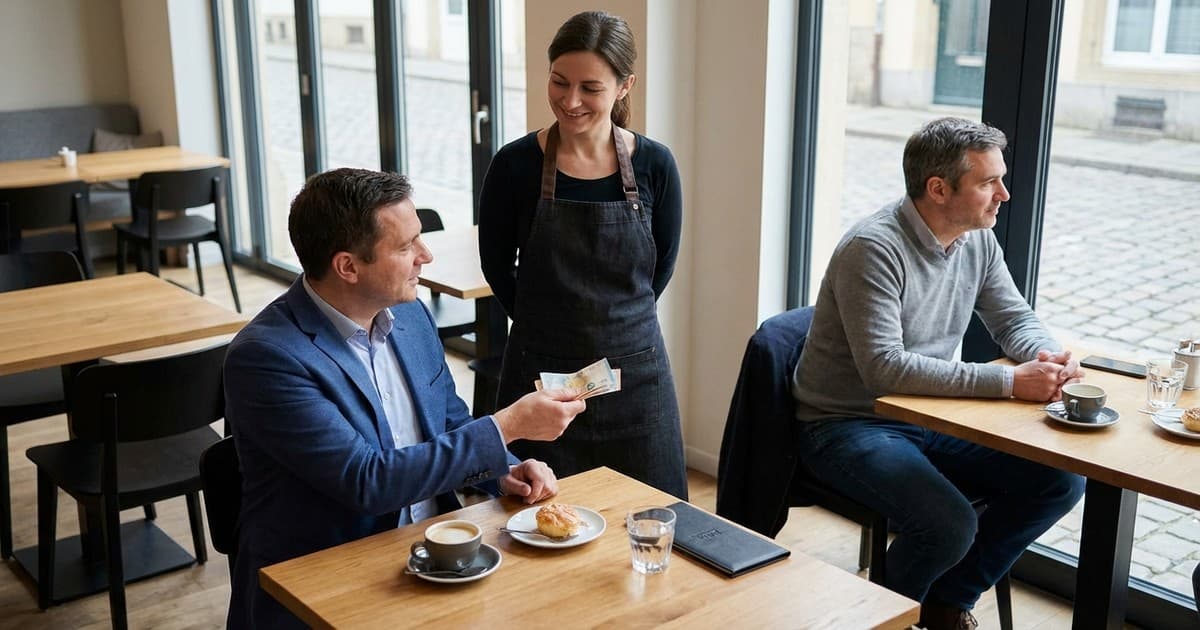
In a casual cafe or a local bistro, the most common practice is rounding up to the nearest euro. If your coffee and pastry come to four euros and sixty cents, leaving the change to make it five euros is perfectly appropriate. This small gesture is common among locals and signals that you were satisfied with the experience. It is a quick and modest way to show appreciation without overthinking the math or the social implications of the transaction.
For formal dinner service at a mid-range or high-end restaurant, the expectations shift slightly. While still not mandatory, a tip of five to ten percent is standard for good service. If you are dining at one of the many Michelin-starred establishments in the city, the upper end of that range is more common. However, even in these luxury settings, leaving nothing is not considered a grave insult if the service failed to meet basic professional standards.
Handling the payment process
When paying by credit card, it is important to note that many card machines in Luxembourg do not have a built-in tip function. If you wish to leave a gratuity, it is best to do so in cash. Leaving a few coins or a small note on the table as you depart is the most traditional method. This ensures the money goes directly to the person who served you. In an increasingly digital economy, carrying a few small denominations of euros remains practical for these moments.
Taxis and hotel services
Taxi drivers in the Grand Duchy do not expect large tips, but rounding up the fare is a standard courtesy. For a longer journey or help with heavy luggage, adding an extra euro or two is a kind gesture. Like restaurant workers, drivers are professionals earning a regulated wage. They do not expect the excessive percentages common in other regions. In hotels, a one or two euro tip for a porter or housekeeping is appreciated but entirely at the discretion of the guest.
Navigating the social norms of the Grand Duchy does not have to be a source of stress for the modern traveler. The core principle of tipping in Luxembourg is that it remains a voluntary gesture of satisfaction rather than a contractual obligation. By rounding up at a cafe or leaving a modest percentage after a fine meal, you align yourself with local customs. This approach respects the professional nature of the service industry while allowing for personal expressions of gratitude. In this wealthy enclave, a small, thoughtful tip often speaks louder than an excessive one.