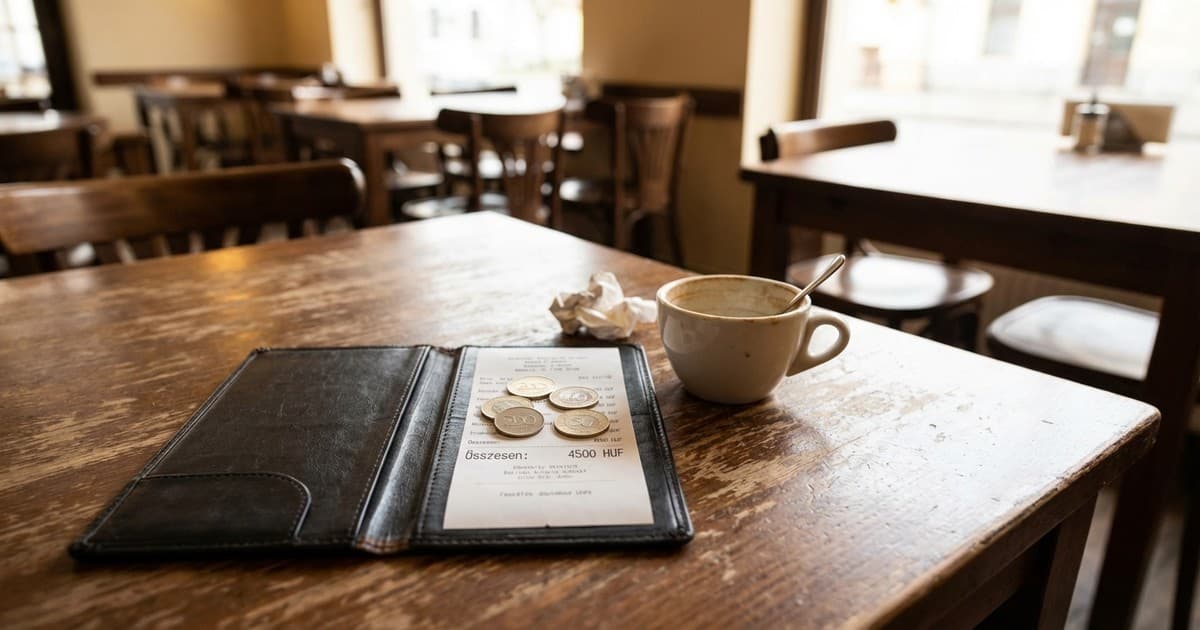
In Central Europe, navigating tipping in Hungary has evolved from a simple cash gesture into a more structured system. By early 2026, the hospitality scene has largely integrated digital payments, yet social expectations remain rooted in tradition. Understanding when and how much to leave is essential for any visitor wanting to respect local customs while avoiding overpaying for service.
For most dining, a gratuity of 10 to 15 percent is the standard for good service. While not legally mandatory, it is deeply ingrained in the service culture of Budapest. However, the rise of the service charge has changed the math for many, making it vital to check the bottom of the receipt before reaching for your wallet.
Decoding the mandatory service charge
Many modern Hungarian restaurants now include a pre-calculated service charge, known locally as szervízdíj, directly on the bill. This fee typically ranges from 10 to 15 percent and is legally distinct from a tip. When this line item appears, no additional gratuity is expected. In these cases, your financial obligation is met by the total listed, and further tipping is purely at your discretion.
The etiquette of cash and card payments
If a service charge is not included, tipping in Hungary remains a manual process. When paying by card, you should tell the server the total amount you wish to pay, including the tip, before they swipe. Unlike in some Western countries, there is often no line on the receipt to add a gratuity after the transaction. Being proactive ensures the server actually receives the intended amount.
For those preferring forint cash tips, the "round up" method is a classic approach. If your bill is 9,200 HUF, rounding up to 10,000 HUF is a generous and simple gesture. It is also important to remember that leaving coins on the table is generally frowned upon. Instead, hand the money directly to the waiter or leave it in the bill folder provided at the end of your meal.
Navigating the "thank you" trap
One unique quirk of Hungarian tipping etiquette involves the phrase "thank you," or köszönöm. In Hungary, saying "thank you" as you hand over cash signals to the server that they should keep the change. If you are paying with a large bill and expect change back before leaving a specific tip, avoid saying thank you until the transaction is complete. This prevents awkward misunderstandings at the table.
Guidelines for taxis and other services
Tipping expectations extend beyond the dining room. For taxi rides, a tip of roughly 10 percent is standard, especially when using ride-hailing apps where you can add the gratuity digitally. In thermal baths or for personal services like hair salons, a small gesture of 500 to 1,000 forints is common. While not strictly required, these small amounts are seen as a vital acknowledgement of professional service.
Conclusion
Tipping in Hungary today is less about rigid rules and more about recognizing quality service in a transitioning economy. While the automated service charge has simplified the process in major hubs, the personal touch of a manual tip remains valued in smaller towns. By staying observant of the bill and understanding local verbal cues, you can navigate the Hungarian service landscape with confidence and grace.