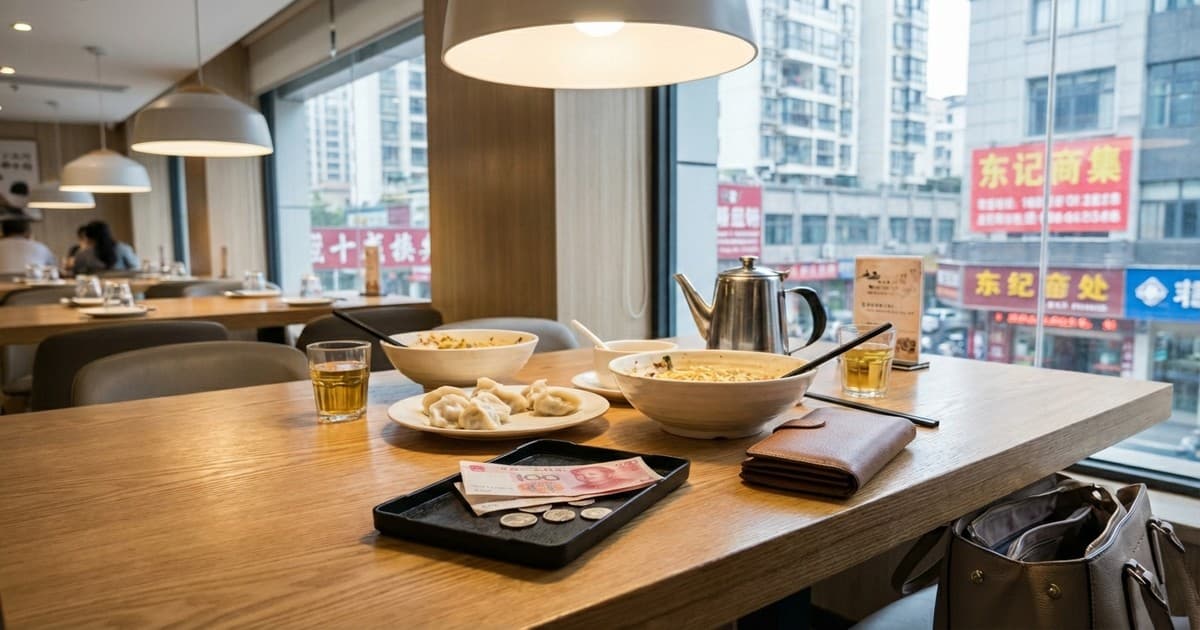
Navigating the complex world of international travel often requires a deep dive into local customs, but few topics cause as much confusion as gratuity. In the People's Republic, the rules are refreshingly straightforward compared to the West. Tipping in China is not a standard practice, and in many scenarios, it can actually be seen as an insult or a misunderstanding of local labor values. For the modern traveler, knowing when to keep your wallet closed is just as important as the service itself.
The cultural rejection of gratuity
For decades, the Chinese service industry has operated on the principle that the price listed is the price paid. Unlike the United States or parts of Europe, where service staff rely on tips to supplement lower wages, Chinese employees are paid a full salary. Leaving extra cash on a restaurant table is often met with confusion rather than gratitude. It is not uncommon for a waiter to chase a customer down the street to return forgotten money.
This lack of a tipping culture is rooted in a sense of professional dignity. In most mainland establishments, providing good service is viewed as a basic requirement of the job rather than a performance for extra reward. While high-end Western-style restaurants in cities like Shanghai may occasionally see international patrons offer tips, the vast majority of local diners never consider it, and staff do not expect it.
Exceptions in the luxury and tour sectors
While the general rule remains strict, globalization has introduced slight nuances in specific environments. In five-star hotels in major hubs like Guangzhou or Shenzhen, tipping culture has begun to take a small foothold. Bellhops or concierges who cater specifically to international guests may occasionally accept a small gratuity for exceptional service. Even in these settings, it is never required, as service charges are often added to the bill.
The most notable exception to the rule applies to private tour guides and their drivers. Because these professionals spend several days with a group and often go beyond their job description, small tips have become customary. Most travel agencies now suggest a daily amount per person for the guide and a smaller portion for the driver. This is one of the few instances where a gesture of financial appreciation is both understood and welcomed.
The impact of a cashless society
The rapid shift toward a cashless society has further complicated the physical act of tipping. With the dominance of platforms like WeChat Pay and Alipay, few locals carry physical currency anymore. Since these apps do not have a built-in tip feature for standard transactions, the mechanical process of leaving extra money has largely disappeared. This digital barrier reinforces the cultural norm, making the transaction transparent and fixed.
How to show appreciation
Understanding the nuances of tipping in China is ultimately about respecting local traditions. By refraining from leaving gratuities in standard settings, travelers honor the professional dignity of service workers who view their job as a complete exchange. While the occasional exception exists for private tours, the safest and most polite approach is to simply offer a sincere "Xiexie." Verbal appreciation carries far more weight than cash.