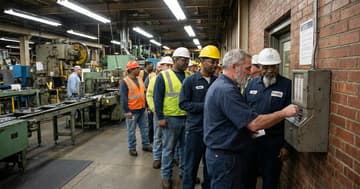
The modern office often feels leagues away from the soot-stained textile mills of the 19th century. However, the foundational philosophy governing how we work remains deeply rooted in industrial age labor patterns. Even as we transition into a digital-first economy, the ghost of the assembly line continues to haunt our boardrooms and digital workspaces. We still measure productivity through hours seated rather than value created, a direct inheritance from manual manufacturing processes. Understanding this historical baggage is essential for redefining the future of work, as many current psychological stresses stem from trying to fit creative tasks into rigid, mechanical frameworks.
The Legacy of the Assembly Line Mindset
The core of the assembly line mindset was the fragmentation of tasks into small, repeatable steps. In contemporary settings, this manifests as extreme specialization and the obsession with micro-management. While high-speed production lines required synchronization, modern knowledge work often suffers under these same constraints. When employees are treated as interchangeable parts of a machine, their intrinsic motivation declines. This structural rigidity prevents the fluid collaboration necessary for innovation in a complex, fast-moving global market.
Time as the Primary Metric of Value
Another remnant is the rigid workplace structure centered around fixed schedules. The eight-hour workday was a hard-won victory for laborers during the Industrial Revolution, yet it has become a psychological prison for those whose output is cognitive. Research into human biology suggests that peak mental performance does not follow a linear, eight-hour curve. By forcing minds to conform to a factory whistle schedule, organizations often prioritize 'performative busyness' over genuine cognitive breakthroughs and high-quality results in the modern knowledge economy.
Bureaucratic Management and Hierarchies
Legacy bureaucratic management systems also favor top-down hierarchies designed for low-skill manual labor. In the factory era, a few thinkers directed many doers, ensuring uniform output. Today, this approach creates bottlenecks in organizations that require rapid pivots. When employees must seek multiple levels of approval for creative decisions, the lag time mimics old-world supply chain delays. Shifting toward decentralized autonomy requires unlearning the psychological comfort that comes from these outdated, command-and-control power dynamics.
Evolving Beyond Industrial Metrics
The persistence of these patterns highlights a significant lag between technological advancement and organizational psychology. While our tools have evolved from steam to silicon, our mental models remain tethered to the efficiency-obsessed logic of the 1800s. To truly thrive in the modern era, businesses must move beyond measuring presence and start valuing outcomes. Breaking free from this factory-era logic requires more than new software; it demands a fundamental shift in how we perceive human potential and the nature of work itself.