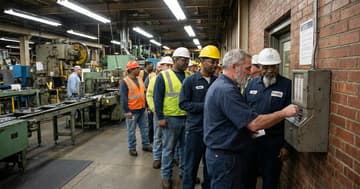
For many professionals, the modern workday feels like a relic of a bygone age. While the technology we use has advanced at breakneck speed, the fundamental structures governing our professional lives remain surprisingly static. We often find ourselves bound by traditions that were designed for assembly lines rather than creative problem-solving or digital collaboration in a global, hyper-connected economy.
These industrial era work rules were originally crafted to optimize the output of machines and manual laborers during the 19th and early 20th centuries. Today, however, they often act as a friction point for a workforce that values flexibility and results over physical presence. Understanding why these legacy habits persist is the first step toward building a more efficient and human-centric future of work.
The persistence of the factory mindset
The primary challenge of the modern workplace is that we are trying to solve 21st-century problems using a management playbook written for steam-powered factories. This creates a disconnect between how we work and how we think. By examining the nine specific rules we have inherited, we can begin to see where our current corporate structures are failing to meet the needs of a knowledge-based society.
1. Fixed starting and ending times
The concept of a synchronized start and end time was essential for a factory floor. If one worker was missing from the line, the entire machine ground to a halt. In our current era, this rigid adherence to a specific clock often ignores the reality of deep focus and varying productivity cycles. Creative work does not happen on a predictable schedule, yet we still expect it to fit within a standard window.
2. The standard 40-hour work week
Born from labor struggles in the early 1900s, the 40-hour week was a massive improvement over the 80-hour grinds of the Victorian era. Yet, it remains an arbitrary benchmark today. Many digital tasks can now be completed in half the time thanks to automation, but the legacy of the "full-time" commitment forces many employees to stretch their work to fill the allotted hours rather than focusing on actual output.
3. Centralized physical attendance
In the industrial age, you had to be physically near the steam engine or the loom to produce value. This birthed the tradition of the office commute. While digital infrastructure allows for seamless remote collaboration, many organizations still cling to the idea that physical proximity is the only true way to measure professional commitment, often ignoring the productivity gains found in flexible work environments.
4. Input as a proxy for performance
Managers in the early 20th century watched bodies move to ensure productivity. This "management by sight" has transitioned into digital surveillance in many modern workplaces. Instead of measuring the quality of a report or the success of a project, legacy systems often prioritize "active" status on chat apps or the number of hours spent at a desk, rewarding presence rather than high-value contribution.
5. Top-down hierarchical command
Industrial management relied on a clear chain of command where managers told workers exactly what to do. While modern complex problems require cross-functional collaboration and autonomy, many corporate structures still maintain these vertical silos. This approach often slows down decision-making and stifles grassroots innovation, as every idea must pass through several layers of bureaucratic approval.
6. Rigid uniformity of process
Standardization was the goal of the assembly line to ensure predictable quality across thousands of units. In the digital age, forcing every employee to follow the exact same workflow can be counterproductive. Unique talents and diverse cognitive approaches are often suppressed in favor of "standard operating procedures" that were originally designed for repetitive manual tasks rather than fluid, creative problem-solving.
7. The separation of work and life
The factory gate served as a literal wall between a worker's professional and personal existence. Today, the boundary is increasingly blurred. However, the industrial mindset still demands that employees leave their personal lives at the door. This ignores the reality that psychological safety and personal well-being are fundamental drivers of modern creativity and long-term professional sustainability.
8. Specialization into narrow silos
The division of labor allowed workers to master one small motion. In the current market, we see this in hyper-specialized roles that prevent employees from seeing the big picture. This siloed approach often leads to a lack of ownership and prevents teams from understanding how their individual contributions impact the final experience for the end user, leading to fragmented and uninspired results.
9. Tenure-based reward systems
In a manual labor setting, years on the job often equated to reliable skill and physical efficiency. Today, the pace of technological change often makes long-term experience less valuable than the ability to learn and adapt quickly. Yet, many compensation and promotion structures still prioritize tenure over the actual value or innovation an individual brings to the firm, discouraging younger, high-impact talent.
Designing a post-industrial workplace
The transition away from these industrial habits is not merely a matter of comfort; it is an economic necessity. As we move deeper into an era defined by artificial intelligence and high-level cognitive work, the old manual frameworks are becoming liabilities. Organizations that successfully dismantle these nine legacy rules will be the ones that attract and retain the best talent in the years to come.