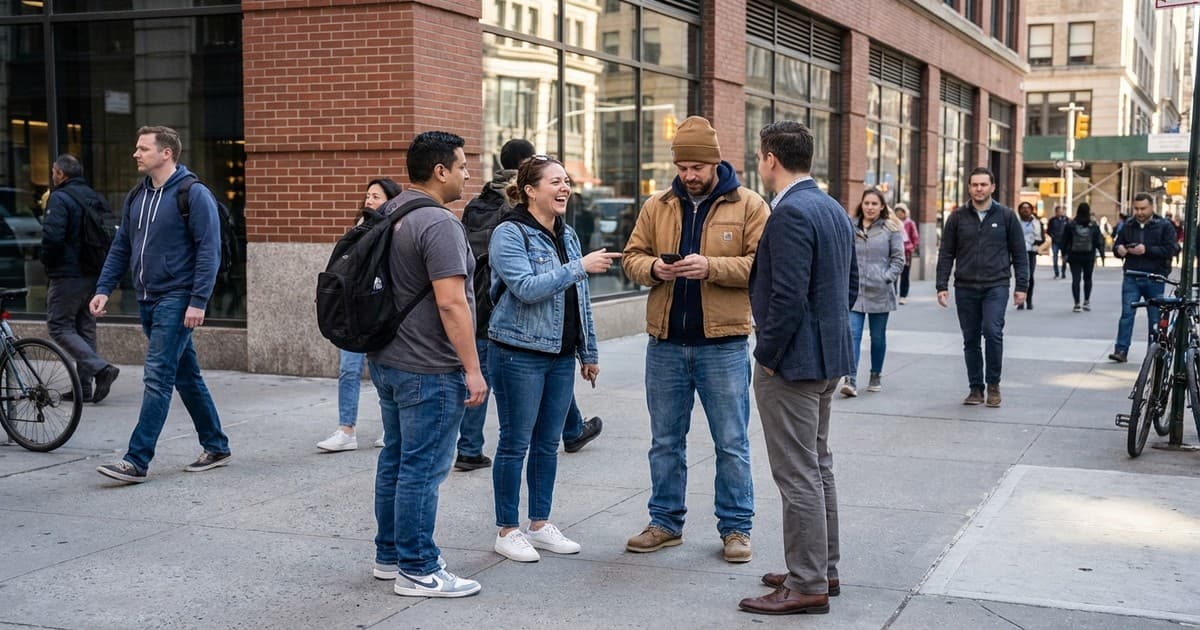
We have moved past the era of the mandatory three-piece suit, but the way we dress has not lost its voice. Even in 2026, where hoodies and sneakers are the norm in boardrooms, the nuances of casual attire carry immense weight. This shift has not deleted social hierarchies; it has merely encoded them in more subtle ways. The reason casual clothing still sends strong social signals is that it communicates cultural capital and belonging through refined, often expensive, displays of effortless style. Understanding these unspoken rules is now more critical than following a formal dress code.
The illusion of a democratic wardrobe
The rise of tech-driven corporate culture suggested a democratization of fashion. If everyone wears a T-shirt, the theory went, then we are all equal. However, the fabric, the brand, and the fit of that T-shirt now act as a more discerning gatekeeper than a tuxedo ever did. In a room full of casual dressers, the specific brand of a plain sweatshirt can signal high net worth more effectively than a traditional luxury watch.
These subtle markers serve as a digital-age shibboleth. Within high-status circles, the ability to recognize premium materials or niche designer collaborations creates an immediate sense of in-group belonging. While the attire may appear relaxed to the untrained eye, it is meticulously curated to signal one's position within a specific professional or social hierarchy.
The power of non-conformity
Sociological research into the "red sneaker effect" suggests that deliberate non-conformity can actually boost perceived status. When an individual chooses to dress down in a formal environment, it signals they are so established in their field that they no longer need to follow traditional rules. This paradoxical signaling tells peers that the wearer possesses a level of autonomy and skill that transcends the need for a suit.
However, this effect only works if the casualness appears intentional rather than accidental. There is a fine line between the "power casual" look of a creative director and the unkempt appearance of someone who has disregarded the context entirely. Mastery over these casual clothing social signals requires a deep understanding of the environment and the expectations of the audience.
The new tribal uniforms
What we call casual is rarely truly random. Whether it is the curated minimalism of "quiet luxury" or the specific aesthetic of limited-edition streetwear, these looks function as modern uniforms. They signal membership in specific professional tribes. These visual cues allow individuals to identify allies and outsiders within seconds, maintaining social boundaries without the overt stiffness of mid-century fashion.
The context of casual wear remains the ultimate indicator of power. A CEO wearing a fleece vest in an office sends a message of approachability paired with absolute authority. Conversely, an intern in the same outfit might be seen as lacking professional awareness. This double standard proves that social signals are not just about the clothes themselves, but about the social permission the wearer has to ignore formality.
Decoding modern status symbols
The evolution of fashion towards comfort has not simplified our social interactions; it has made them more sophisticated. As we navigate 2026, the ability to read these subtle cues remains a vital social skill. Casual clothing provides a canvas for expressing identity and status while appearing relaxed. By recognizing that every aesthetic choice is a form of communication, we can better understand how modern society negotiates power.
Ultimately, the decline of the suit has not meant the end of the dress code; it has simply replaced rigid rules with fluid expectations. Status is no longer about who has the most expensive silk tie, but about who best understands the language of the low-key. In a world that prizes authenticity, the most potent social signals are those that appear as if they were never sent at all.