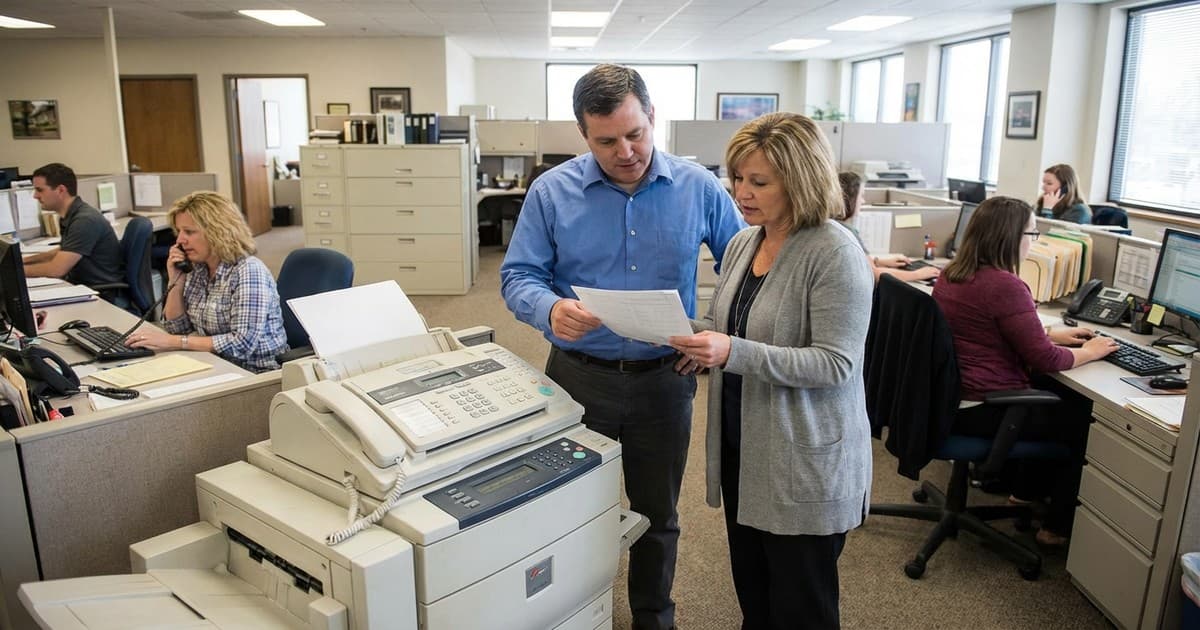
It is 2026, and the digital revolution was supposed to have long ago rendered the fax machine a museum piece. Yet, from Tokyo to Washington, the screech of a transmitting document remains a standard office sound. This persistence is not a matter of nostalgia or technical incompetence. Instead, the primary reason why fax numbers still exist is that they offer a unique combination of legal validity, point-to-point security, and regulatory compliance that email cannot easily match.
Law and healthcare are the primary drivers of this longevity. In many jurisdictions, a faxed document is legally considered an original, while an emailed scan is merely a copy. This distinction is vital for contracts and court filings where legal signatures are required. Furthermore, the point-to-point nature of a telephone line offers a specific type of security. Unlike email, a fax moves directly from sender to receiver without passing through servers.
Privacy mandates and the security of the line
In the United States, the healthcare sector remains tethered to the fax due to strict data privacy regulations. Systems built for HIPAA compliance often prioritize faxing because it avoids the pitfalls of unencrypted digital messaging. Doctors and pharmacists rely on the physical confirmation page as a receipt of care. It provides a standardized audit trail that digital platforms often struggle to replicate with the same level of simplicity.
Global business culture also plays a significant role in this persistence. In Japan, for instance, the fax machine is often viewed as a more formal way to conduct business. Paper documents allow for handwritten annotations and official stamps, which hold high cultural value. Even as digital signatures become common, the physical reality of a faxed page provides a sense of certainty that many executives still prefer over ephemeral emails.
The high cost of technical replacement
Technical inertia is the final piece of the puzzle. Replacing a global network of legacy hardware requires a massive financial investment. Many organizations stick with what works because the cost of transitioning every partner to a new secure document transmission portal is prohibitive. As long as one major player in a supply chain requires a fax, everyone else must maintain a number, creating a cycle of dependency that is remarkably resilient.
The persistence of the fax machine is a reminder that technology does not always move in a straight line. Reliability and legal standing often outweigh the convenience of modern speed. While hardware has evolved into cloud-based services, the underlying protocol remains a backbone of administration. As long as security and regulatory certainty are prioritized, the fax number will continue to hold its ground against the digital tide.