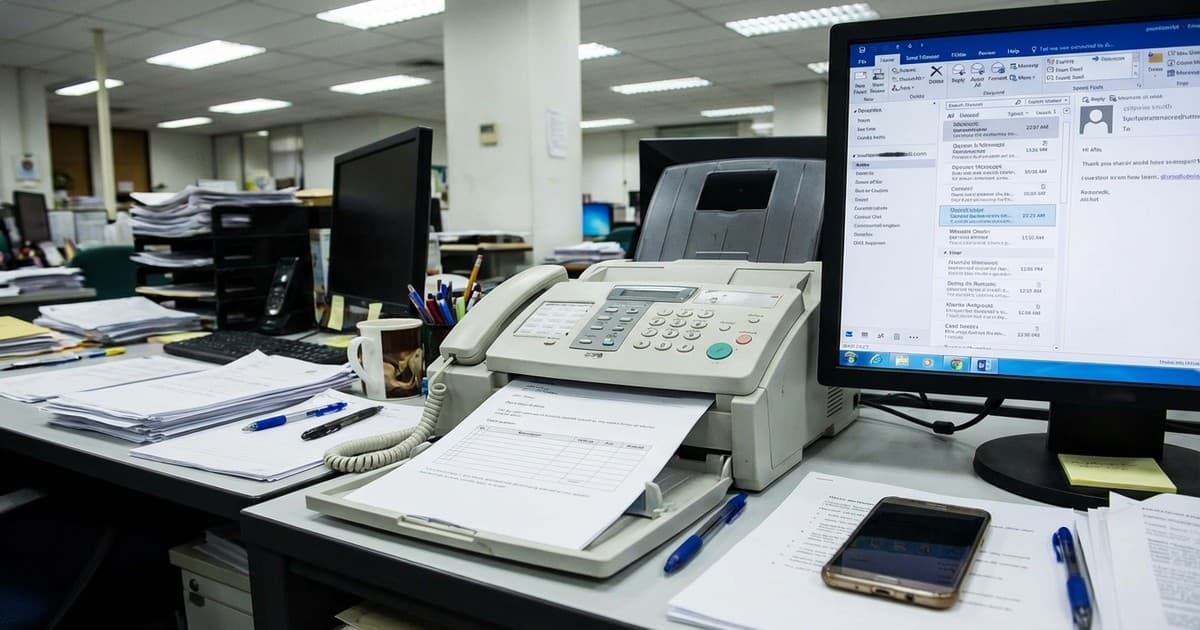
In an era of instant messaging, the persistence of fax numbers feels like a technological glitch. Yet, beneath the surface of modern business, these analog relics remain vital. From hospital wings to legal chambers, the humble fax bridges the gap between physical documents and digital speed. Today, we are looking at an evolving ecosystem that handles millions of pages daily across the globe.
Understanding why these numbers remain in use reveals a fascinating intersection of law, security, and institutional inertia. What was once a clunky office machine has transformed into a digital service that remains essential for global commerce and public safety. These communication channels provide a level of certainty that modern email often lacks, ensuring that critical documents reach their intended destination without interference.
The legal validity of a physical signature
One primary reason organizations cling to faxing is the unique legal status afforded to the medium. In many jurisdictions, a faxed document is considered a legally binding original, carrying more weight than a standard email attachment. This is because fax transmissions provide a direct, point-to-point connection that creates a traceable audit trail. A confirmation page serves as definitive proof that a document reached its destination.
Healthcare and the need for interoperability
The medical sector remains a primary driver of healthcare communications via fax. For doctors and pharmacists, faxing is not about nostalgia; it is about compliance and immediate interoperability. While electronic health records have improved, different systems often fail to communicate. A fax number provides a universal language that works across every clinic. It remains a reliable way to transmit sensitive data while adhering to privacy rules.
Security through obsolescence
Counterintuitively, the perceived obsolescence of faxing is a key security feature. Unlike emails, which can be intercepted by malware or caught in phishing filters, traditional fax signals travel over public telephone networks. This makes them significantly harder to hack remotely. For industries dealing with high-value trade or sensitive government intelligence, the "closed" nature of a telephone line offers a layer of secure document transmission.
The evolution of digital faxing
It is a mistake to assume that a fax number always terminates at a noisy physical machine. Modern faxing has largely migrated to the cloud, where digital faxing services allow users to send documents via email or web portals. This hybrid approach keeps the legacy number active while removing the need for paper waste. It allows businesses to maintain established communication channels while benefiting from the flexibility of the cloud.
Conclusion
The survival of the fax number is a testament to the fact that reliability often trumps novelty in high-stakes environments. While hardware has evolved into cloud software, the protocol remains a pillar of global communication. As long as law, medicine, and finance require a verifiable method for document exchange, the fax will remain relevant. It ensures critical information stays moving while blending legacy reliability with modern digital convenience.