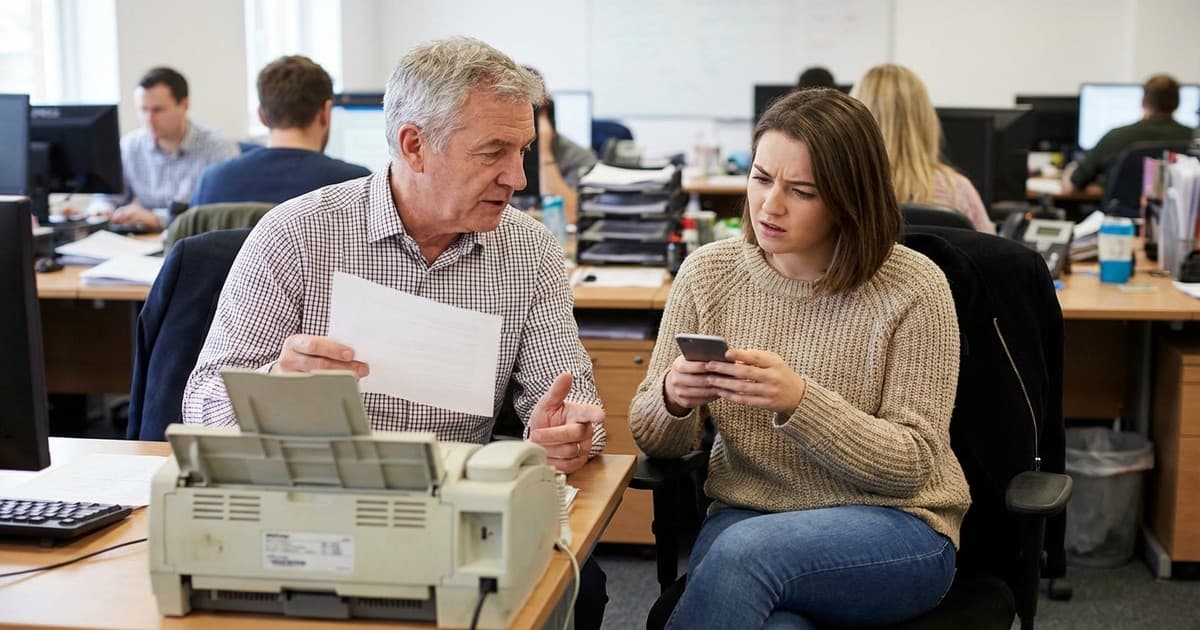
While they look identical on a business card, a fax number and a phone number serve distinct technical purposes. One is designed for the nuances of human speech, while the other translates visual data into sound waves. Understanding the difference between a fax number vs phone number is more than a technicality; it dictates how your business handles secure documents and integrates with modern cloud-based communication systems in this digital age.
The technical gap between voice and data
At their core, both numbers are addresses within the Public Switched Telephone Network. However, their internal logic differs. A voice line allows for fluctuations in sound, but a fax line requires a dedicated path for data signals. If you try to use a standard voice line for faxing without the right configuration, the connection often drops because the hardware cannot interpret the noise as stable data packets.
Historically, companies maintained separate physical copper wires for each service to ensure reliability. Today, however, the distinction has moved into the cloud. Digital faxing services now assign virtual numbers that look like any other ten-digit code but are routed through servers that convert images into encrypted files. This evolution has blurred the lines for the user while keeping the technical protocols strictly separate in the background.
Why the distinction still matters today
Using the correct number type is critical for legal compliance and operational efficiency. In industries like healthcare or law, documents transmitted via a dedicated fax line are often considered more secure than standard email. This is because the point-to-point nature of a fax transmission is significantly harder to intercept than a standard digital file packet moving across the open internet, where it may pass through multiple vulnerable nodes.
Shared lines often lead to professional frustration. If a single number is used for both voice and fax, a specialized switch is required to distinguish the incoming signal. Without this, a human caller might be met with the high-pitched screech of a fax machine, or a machine might fail to receive a document because a person answered the call first. This lack of professional separation can result in missed opportunities and technical errors.
Even as we move further into a digital-first era, the distinction between these two communication paths remains relevant. Choosing a dedicated fax service ensures that your professional image remains intact and your data remains secure. Whether you rely on physical machines or cloud-based alternatives, knowing which line to use for which task prevents technical errors and ensures that critical information always reaches its intended destination.