Modern urban landscapes are living museums, though most residents walk past their exhibits without a second glance. From ornate ironwork to curiously shaped curbs, many city design features that define our neighborhoods were built to solve problems that no longer exist. These vestigial structures remain fixed in place, anchored by historical inertia and the sheer durability of Victorian-era engineering.
The silent utility of the boot scraper
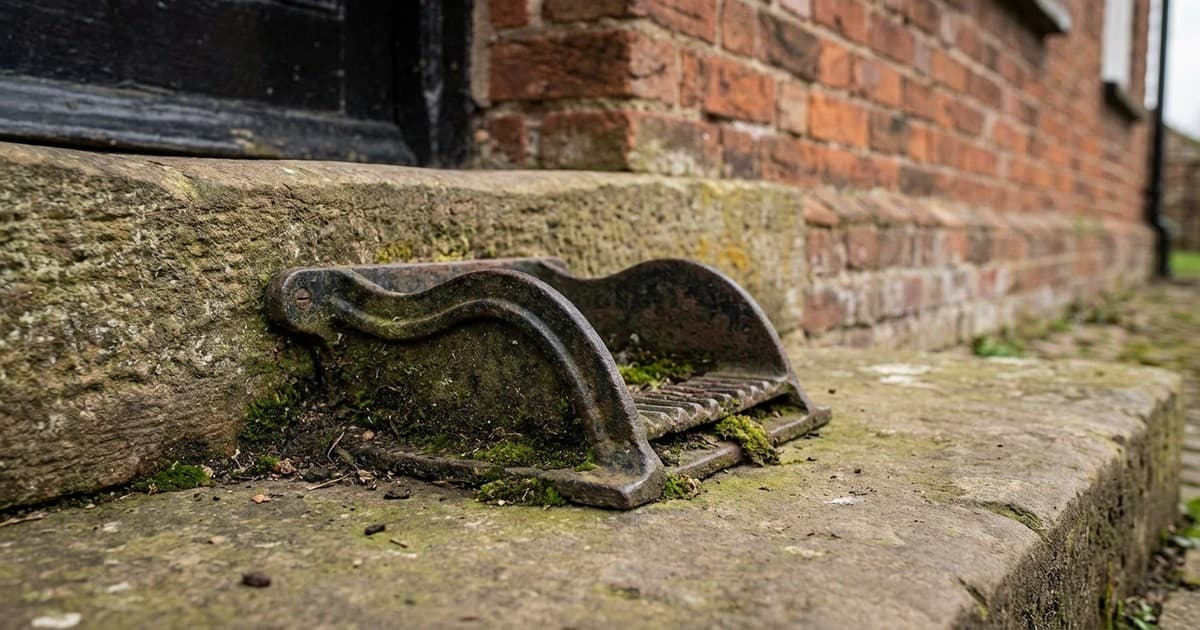
Near the entrance of nineteenth-century townhouses, small iron blades are often found bolted to the masonry. These boot scrapers were once essential for navigating the urban core. Before the widespread adoption of asphalt, city streets were a messy slurry of mud, coal dust, and animal waste. The scraper allowed visitors to remove the worst of the grime before stepping onto expensive hardwood floors or delicate rugs inside.
Fender stones and the geometry of transit
In many older European and American cities, the corners of stone buildings are intentionally rounded or feature a smooth, protruding stone base. While they look like aesthetic choices today, they were originally designed as fender stones. These architectural safeguards protected buildings from the heavy iron hubs of horse-drawn wagons, which could easily chip away at a sharp masonry corner during a tight turn.
The forgotten necessity of mounting blocks
Elevated stone platforms occasionally appear on the edges of modern sidewalks. These mounting blocks, or horse blocks, served as the primary boarding points for carriages and horses. In an era of high-wheeled vehicles and long, restrictive skirts, the blocks provided a necessary step up to ensure a dignified entry and exit. They stand now as lonely markers of a transit system that predated the internal combustion engine.
Lighting the way with snuffer cones
Iron railings in older districts sometimes feature small, conical caps that resemble miniature torches. These were snuffer cones, used by link-boys who carried oil torches to guide wealthy pedestrians through dark, unlit streets at night. When the destination was reached, the link-boy would plunge the torch into the cone to extinguish the flame. Today, these cones persist as ornamental flourishes on gates that no longer need manual lighting.
Fire marks and private protection
Above certain doorways, small lead or iron plaques depicting fire engines or logos can still be spotted. These fire marks identified which private insurance company covered the building. In the eighteenth and nineteenth centuries, fire brigades were often private entities that only responded to properties displaying their company’s specific mark. A building without a plaque might be left to burn while competing brigades watched from the street.
These forgotten elements serve as a physical bridge to the daily routines of the past. As we move toward smarter cities and digital infrastructure, these analog relics remind us that urban planning is always a response to the immediate needs of the population. Preserving these features helps maintain a city's unique character, ensuring that the history of how we once lived and moved is not entirely erased by the drive for modernization.