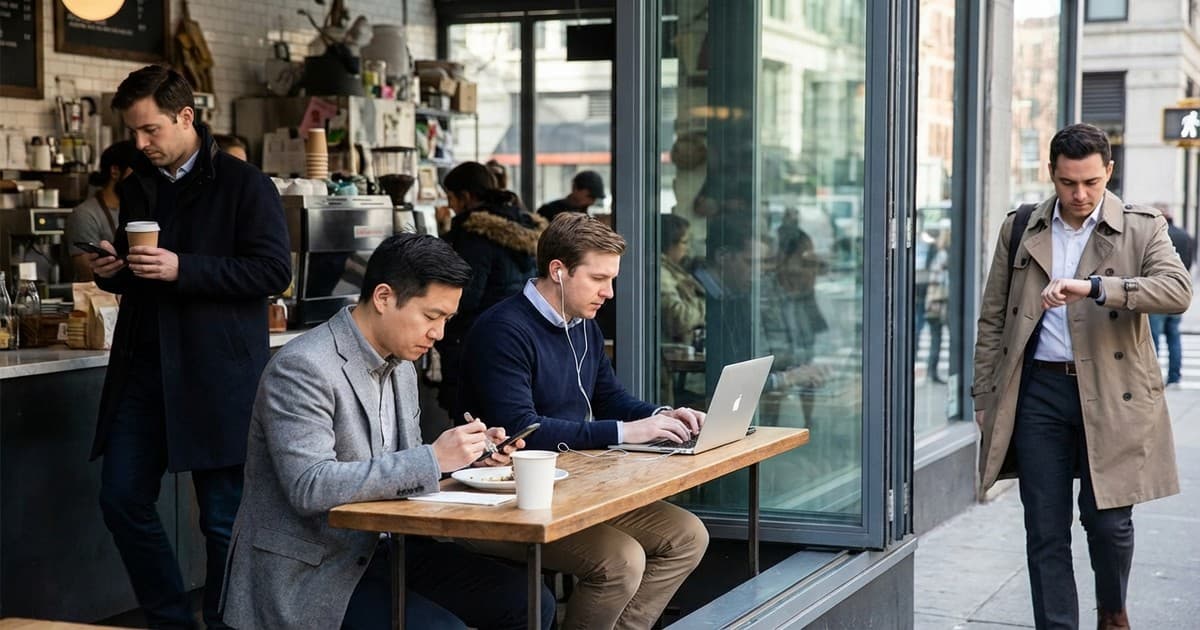
In the mid-1970s, the rhythm of daily existence followed a predictable, analog pattern. Communication was tethered to physical locations, and information moved at the speed of the morning paper. Today, as we navigate early 2026, those boundaries have largely dissolved. Significant modern life changes have reshaped how we eat, work, and interact with our neighbors. Behaviors that once seemed like science fiction are now unremarkable.
1. The expectation of perpetual availability
Half a century ago, leaving the house meant being unreachable. If you were not home to answer the landline, callers simply waited. Now, the expectation of an immediate response is a foundational element of professional and personal life. We carry the entire world in our pockets, creating a state of continuous partial attention that has fundamentally altered our focus and how we value quiet moments of disconnected solitude.
2. Outsourcing agency to algorithms
We have shifted a staggering amount of personal agency to software. Whether choosing a film, a dinner recipe, or even a romantic partner, we now trust algorithms to filter our choices. Fifty years ago, these decisions were driven by word-of-mouth or simple serendipity. Now, we rely on data-driven recommendations to navigate the overwhelming volume of options available in every category of life, from entertainment to career paths.
3. The end of the physical storefront
Retail was once a social, geographic activity restricted by business hours. Today, the concept of a closing time is obsolete. We have normalized ordering household essentials at midnight for delivery by dawn. This shift has turned the home into a hub for global logistics, replacing the local high street experience with a series of digital clicks. Shopping is no longer a destination; it is a background process of modern living.
4. Publicly sharing private milestones
The notion of a private life has undergone a radical transformation since the seventies. Photographs were once kept in physical albums and shown to a select few friends or family members. Today, documenting our meals, vacations, and minor grievances for a global audience is a standard social ritual. This constant broadcast has turned individual identity into a curated brand that requires regular maintenance, updates, and public validation.
5. The normalization of remote labor
The traditional office-bound career is no longer the sole blueprint for success. While physical workplaces still exist, the ability to contribute to a team from a kitchen table or a different continent has become standard. This evolution has decoupled geography from opportunity, allowing for a more flexible, albeit more isolated, professional landscape. This shift in how we view the 'workplace' would have been unthinkable to the 1970s workforce.
6. The decline of cash transactions
Carrying a wallet full of banknotes was a practical necessity for decades. In 2026, physical currency is increasingly viewed as a backup or a curiosity. Digital wallets and tap-to-pay systems have streamlined commerce to the point of invisibility. While this offers immense convenience, it has also changed our psychological relationship with spending, making the exchange of value feel less tangible than when we handed over paper and coins.
7. Subscription-based ownership
Ownership itself has become a fluid concept. We used to buy records, movies, and software once and keep them forever. Now, we subscribe to access. This transition from owning to licensing means our libraries and tools disappear if we stop paying monthly fees. We have traded the security of physical possession for the convenience of infinite variety and instant updates across all our devices, regardless of where we are located.
8. The gig economy as a standard
The 1970s career path often involved long-term loyalty to a single employer. Today, millions of people navigate a fragmented labor market, moving between short-term contracts and app-based tasks. This gig model has become a normalized way of life for the modern worker. While it provides autonomy for many, it has also dismantled the traditional safety nets and predictable schedules that defined the mid-century professional experience.
9. Constant monitoring and surveillance
Security cameras, doorbell monitors, and location-tracking apps are now ubiquitous features of the daily landscape. Fifty years ago, the level of observation we accept today would have been considered an extreme overreach of privacy. We have traded a significant portion of our anonymity for the promise of safety and convenience. Being digitally tracked is no longer a specialized concern; it is a standard part of the modern urban experience.
These nine shifts highlight a broader trend toward speed, convenience, and transparency. While we often focus on the technology itself, the real change lies in our internal expectations. We have adapted to a world that never sleeps and never forgets. As we look ahead from our vantage point in 2026, it is clear that the last fifty years have not just updated our tools; they have fundamentally rewired our social fabric and daily habits.