Urban landscapes often seem like permanent fixtures of the modern world. However, many of the globe's most famous layouts were dictated by urgent, historical crises that have long since vanished. From the threat of nomadic invasions to the spread of cholera, these challenges forced architects to reshape reality. Understanding this historical urban planning reveals why our streets look the way they do today.
These city design choices were never about aesthetics alone. They were survival strategies etched into stone and mortar. When we walk through a city center, we are navigating a landscape of solved problems. While the threats of the 17th or 19th centuries are gone, the physical responses to them remain. Here are eight cities whose very existence was defined by obstacles that are now obsolete.
Venice: A refuge from land-based invasions
Venice was not built on a lagoon for the view. In the 5th century, the fall of the Roman Empire left the locals vulnerable to Germanic and Hunnic invaders. The marshes provided a natural moat that land-based armies could not cross. Today, the water that once protected the city is its greatest environmental threat, but the original logic was purely defensive, prioritizing safety over the convenience of solid ground.
Paris: Designing streets to stop revolutions
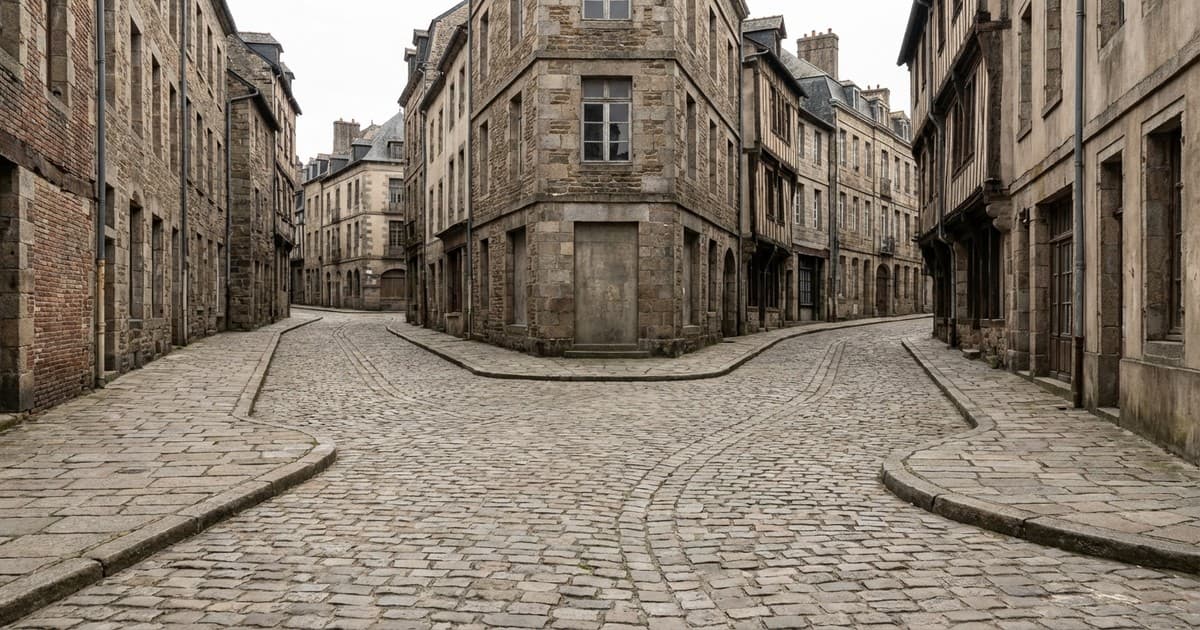
The wide boulevards of Paris are a direct response to 19th-century civil unrest. Before Baron Haussmann’s intervention, the city consisted of narrow, winding alleys that were easy for revolutionaries to barricade. By widening the streets, the government made it possible for cavalry and artillery to move quickly. The goal was to prevent the localized urban warfare that had plagued the French capital for decades.
Chicago: Raising an entire city to fight mud
In the mid-1800s, Chicago faced a literal swamp. The ground was so low and wet that drainage was impossible, leading to frequent outbreaks of cholera and typhoid. Instead of moving, engineers used massive jackscrews to lift entire blocks of buildings several feet into the air. This allowed for the installation of a modern sewer system, solving a public health crisis that once threatened to destroy the growing metropolis.
Naarden: The geometry of gunpowder defense
The Dutch city of Naarden is one of the world's best-preserved star forts. Its distinct shape was a reaction to the evolution of heavy artillery in the 17th century. High, thin walls were useless against cannonballs, so engineers designed low, thick, angled bastions. While modern warfare has made these fortifications irrelevant, the town remains a relic of obsolete infrastructure and ballistics defense.
St. Petersburg: Forcing a window to the West
Peter the Great founded St. Petersburg in 1703 on a mosquito-infested swamp. The problem he sought to solve was Russia’s isolation from European trade and naval power. Building a city there was an immense logistical nightmare that cost thousands of lives. Now a cultural hub, its location was originally a strategic gambit to secure a permanent, warm-water presence on the Baltic Sea, a requirement that defined its placement.
Carcassonne: The necessity of double-walled security
The medieval citadel of Carcassonne stands as a monument to the fear of siege warfare. Its massive double walls and 53 towers were built to withstand months of isolation and direct assault. In the age of satellite surveillance and long-range missiles, such physical barriers offer no tactical advantage. Yet, the city’s layout preserves a time when physical thickness was the only measure of safety against rival feudal lords.
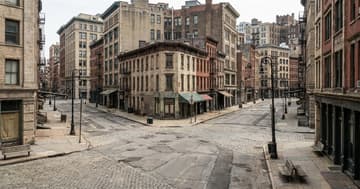
Manhattan: The grid as a health mandate
New York’s grid system, established by the Commissioners' Plan of 1811, was not just about real estate. It was designed to improve air circulation and sunlight in a crowded, unsanitary urban environment. Reformers believed that straight, wide streets would prevent the miasma thought to cause disease. While we now understand germ theory, the rigid layout remains the defining feature of the island's unique urban density.
Canberra: Ending a capital city rivalry
Australia’s capital was built from scratch because Sydney and Melbourne could not agree on which should lead the nation. The problem was a political deadlock between two competing power centers. Planners chose a site in the middle of the wilderness to maintain neutrality. Today, the administrative heart of the country exists purely because of a 20th-century compromise over regional prestige and parliamentary geography.
The legacy of obsolete solutions
This process of urban evolution reminds us that cities are rarely blank-slate endeavors. They are a series of reactions to immediate pressures. While we no longer fear barbarian hordes or the need for horse-drawn artillery clearance, the structures built to address those fears dictate our daily commutes. Our modern lives are shaped by the ghosts of problems we have long since solved through ingenuity and engineering.
Looking forward, our current cities are already adapting to new crises like rising sea levels and digital connectivity. Just as the star forts of the past became parks, today's infrastructure will eventually serve purposes we cannot yet imagine. History shows that the solutions of one era often become the cherished landmarks of the next, proving that even obsolete designs have lasting value for the people who inhabit them.