Most professionals operate within a framework of rules and rituals finalized decades ago. These legacy systems were not designed for the cognitive or digital work of 2026, but for the industrial era. We often follow these norms without questioning their origins, even when they hinder productivity.
By examining the history of these habits, we can see how much of our daily routine is built on the needs of switchboard operators, typing pools, and file clerks. Understanding these obsolete office practices is the first step toward building a more logical workplace.
The rigid 9-to-5 schedule
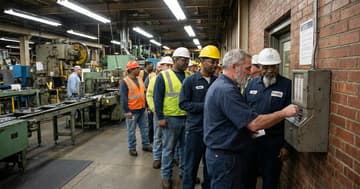
The standard eight-hour workday is a relic of the manufacturing age. It was designed to ensure that assembly lines remained fully staffed and that physical machinery was never idle. In 2026, where most work is asynchronous and intellectual, forcing employees into a fixed time block serves little purpose. It ignores the reality of peak mental performance.
Carbon copies and CC fields
Every time you "CC" a colleague on an email, you are using a term from the era of carbon paper. Clerks once placed sheets of carbon-coated paper between pages to create duplicates by hand. While the physical paper is gone, the habit of over-copying remains. This practice often leads to digital clutter and the "reply-all" storms that plague modern communication.
The physical 'in-box' and 'out-box'
Digital dashboards still use icons of wooden or plastic trays. These were originally essential for a "runner" to collect physical documents for the next stage of a process. Today, these silos often represent a linear workflow that no longer fits. Modern projects move in multiple directions simultaneously, yet we still mentally "tray" our tasks in a way that slows down collaboration.
Shorthand and dictation culture
There was a time when executives spoke and assistants transcribed. This required a specific hierarchy and a massive amount of downtime while waiting for drafts. Even though we now have instant voice-to-text and direct messaging, many offices still maintain a "gatekeeper" culture. This creates bottlenecks where leaders cannot communicate without a formal administrative layer.
The obsession with filing folders
Digital storage is often organized into nested folders, mimicking the physical cabinets of the 20th century. This structure was created because a physical piece of paper could only exist in one place at a time. In a world of metadata and instant search, this rigid hierarchy is often a hindrance. It makes information harder to find than a simple keyword query would.
Open-plan noise management
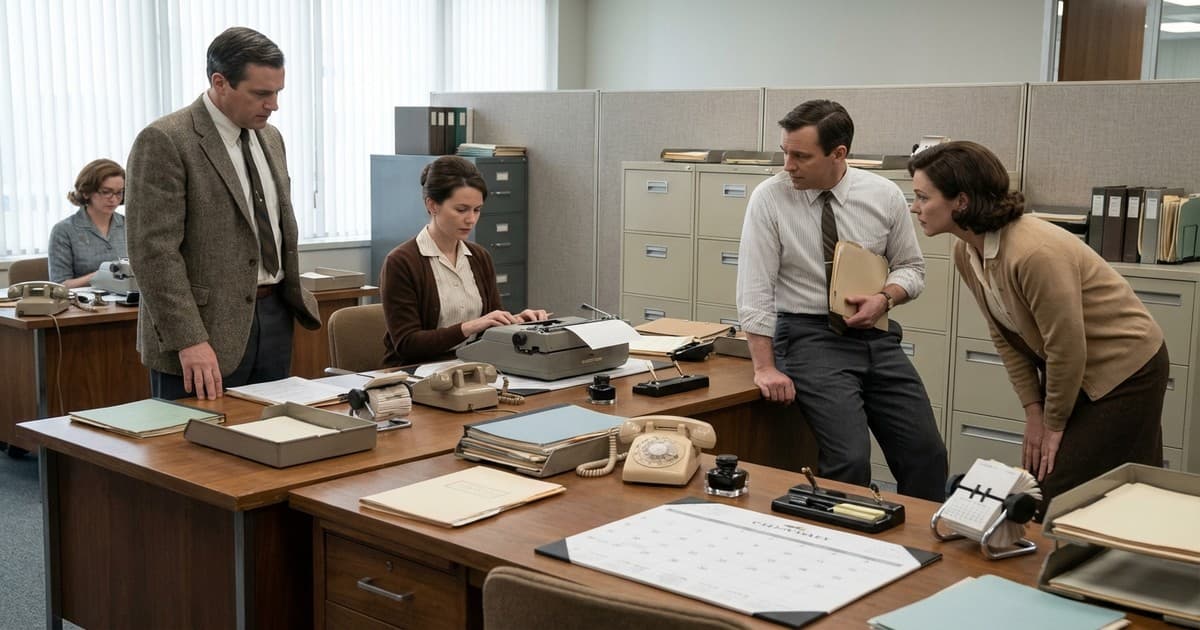
The open office was originally pitched as a way to facilitate the flow of paper between desks. It was designed for clerical "typing pools" where visual supervision was the primary way to track output. For the deep, focused work required in 2026, these layouts are often counterproductive. They prioritize the ease of the manager’s sightline over the employee’s concentration.
Presenteeism and desk-time
Evaluating a worker's value by how many hours they spend in a chair is a habit from the manual labor era. If a worker left the factory floor, production stopped. In knowledge work, there is no direct correlation between desk time and quality output. Yet, many organizations still use physical presence as a proxy for engagement, ignoring the actual results achieved.
Designing a post-industrial workplace
We are currently living through a period where technology has outpaced our organizational behavior. Many of the frustrations felt in the modern workplace stem from this friction between 20th-century habits and 21st-century tools.
Transitioning away from these legacy practices requires more than just new software. It requires a shift in how we define productivity and trust. By shedding the rituals of jobs that no longer exist, we can finally create an environment that supports the way we actually work today.