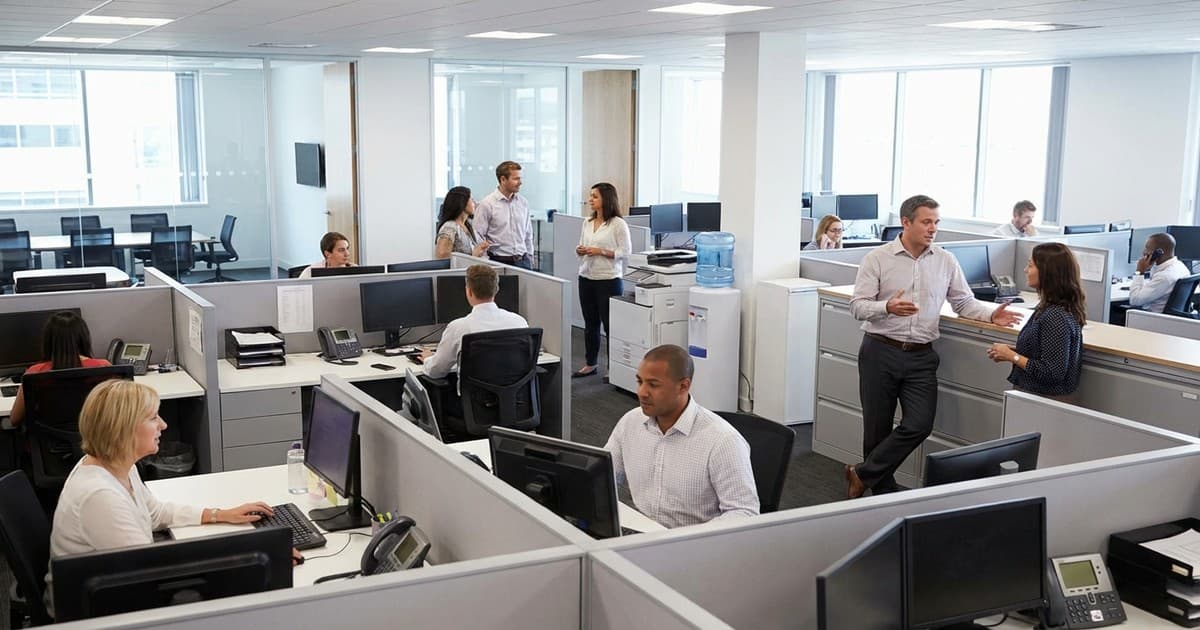
Despite the rapid acceleration of the digital age, many professional environments remain paradoxically tethered to the past. While we utilize cutting-edge technology and global networks, the underlying logic of our daily labor often follows outdated organizational models established during the Second Industrial Revolution. These frameworks prioritize standardization, strict oversight, and rigid scheduling over the cognitive agility required for modern tasks. Consequently, many 21st-century professionals find themselves performing creative or analytical work within a systemic cage designed for assembly-line efficiency. Bridging this gap is the primary challenge for the future of work.
The Persistence of Industrial Era Management
The contemporary workday is largely a relic of 19th-century factory logic, where maximizing machine uptime was the central goal. In this context, industrial era management treats human presence as a proxy for productivity. This focus on visible attendance—often called presenteeism—ignores the reality that cognitive labor does not happen at a steady, linear pace. By forcing employees into a rigid eight-hour block, organizations often stifle the very creativity they claim to value, prioritizing a sense of control over actual output quality.
Rigid Hierarchical Structures
Most modern companies still operate via hierarchical structures that concentrate decision-making power at the top of a pyramid. These models were originally designed to manage large-scale manual labor where communication was slow and expensive. In today’s high-speed information economy, these layers of middle management often become bottlenecks rather than facilitators. When employees closest to the data lack the authority to act, innovation slows down, and the organization becomes less resilient to sudden shifts in the global market.
Cultural Inertia in Modern Workplace Culture
The transition to more flexible models is frequently hampered by cultural inertia within established institutions. Even when technology enables remote work or decentralized authority, modern workplace culture often defaults to 'command and control' tactics. This stems from a deep-seated leadership fear that granting autonomy will lead to a loss of quality or coherence. Rather than evolving, some firms use sophisticated tracking software to replicate old-school surveillance, effectively digitizing the factory floor rather than modernizing the work philosophy.
The Cost of Psychological Mismatch
Operating within legacy systems takes a measurable toll on the workforce. Humans are not biologically optimized for the sustained, repetitive focus demanded by legacy management styles. When individuals are treated as interchangeable components in a machine, the result is chronic stress and professional burnout. A healthy environment requires psychological safety and a sense of agency, both of which are often absent in rigid, top-down systems. Aligning organizational design with human biology is no longer optional; it is a necessity for sustainable growth.
To move forward, companies must recognize that the tools of the 21st century cannot reach their full potential within the structures of the 19th. Evolving beyond these models requires a fundamental shift in how we define value—moving from hours logged to results achieved. By dismantling unnecessary hierarchies and fostering genuine autonomy, organizations can create environments where both people and innovation thrive. The future of work belongs to those who dare to leave the industrial blueprint behind.