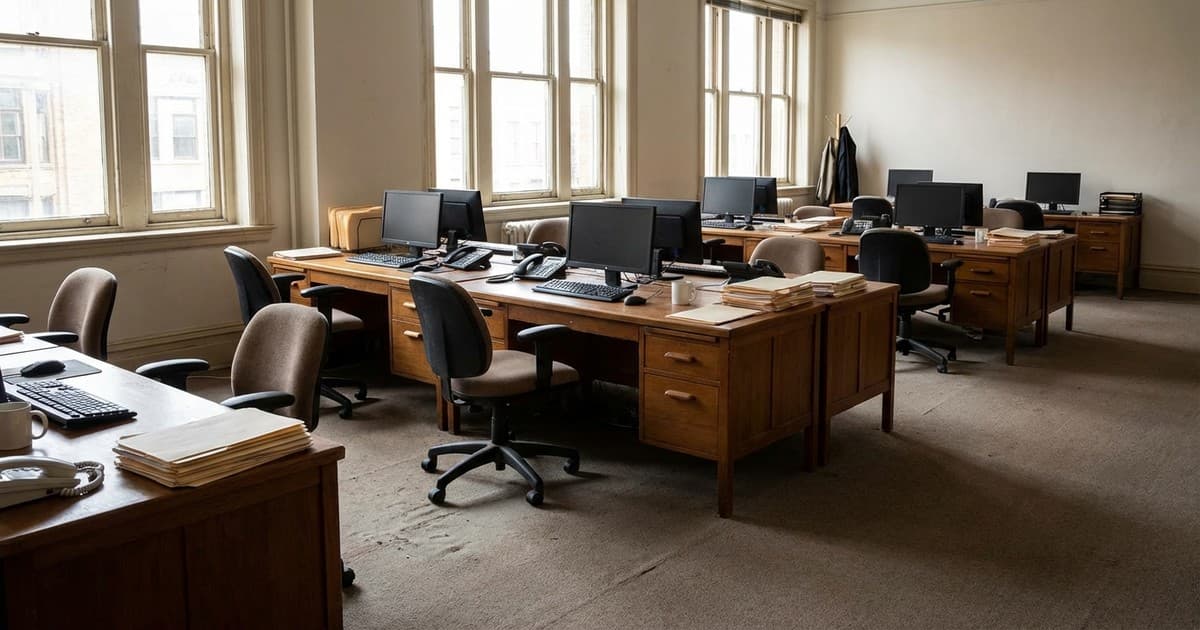
Many of our daily office behaviors are governed by hidden workplace traditions that have survived long after their original purpose vanished. We clock in at specific times, dress in certain fabrics, and structure our breaks around historical precedents rather than modern physiological needs. These routines often feel like natural laws of business, yet they are actually social artifacts. Understanding why we follow these unwritten rules requires looking back at the Industrial Revolution and early labor movements. By examining these roots, we can better understand the modern professional landscape and how it continues to shape our cognitive habits today.
The Industrial Roots of the Standard Work Week
The five-day, 40-hour work week is perhaps the most pervasive of all hidden workplace traditions. While it feels like a permanent fixture of adult life, its widespread adoption only began in the early 20th century. Henry Ford famously implemented this schedule in 1926 to ensure his workers had enough leisure time to purchase and use cars. Before this, six-day work weeks were the standard in most factories. Today, we continue to adhere to this rigid structure despite the shift from manual labor to cognitive tasks, often ignoring how modern productivity fluctuates differently.
Why We Still Dress for Success
Professional dress codes serve as another example of unwritten office rules with deep historical connections. The suit and tie ensemble traces back to the Victorian era’s rejection of ornate aristocratic fashion in favor of sober, industrial-friendly attire. This shift was intended to signal discipline and focus within the burgeoning corporate world. Even as modern offices move toward business casual, the underlying hierarchy communicated through clothing remains a dominant psychological factor. These unwritten office rules dictate how we perceive authority and competence without us ever questioning the fabric of those choices.
The Unintended Legacy of the Cubicle
Many people view the office cubicle as a symbol of corporate drudgery, but its origin was surprisingly idealistic. Designer Robert Propst created the Action Office in the 1960s to give workers more privacy and autonomy than the traditional open-floor bullpen. He intended for these spaces to be flexible and dynamic to boost creativity. However, corporations adopted the design to cram more people into smaller footprints, leading to the rigid rows we see today. We follow these layout rules thinking they optimize focus, while they often actually hinder natural human collaboration.
The Evolution of Corporate Etiquette
The specific ways we communicate in meetings and via email are heavily influenced by corporate etiquette history. Many formal sign-offs and meeting structures are holdovers from 19th-century bureaucratic correspondence. These standards were designed to minimize personal friction in high-stakes environments. While digital communication has sped up the pace, the underlying expectation of formal deference persists. We often mimic these behaviors to fit into the established culture, rarely pausing to consider if these legacy communication styles are still the most efficient way to exchange ideas in a fast-paced, modern digital economy.
In conclusion, the rules that govern our professional lives are rarely based on recent scientific data regarding human productivity. Instead, they are largely the result of historical compromises and industrial-era logic. Recognizing that these hidden workplace traditions are choices rather than requirements allows organizations to innovate. As the world of work continues to evolve with remote and hybrid models, we have the opportunity to move past outdated habits. Re-evaluating these origins helps us create a more efficient and human-centric environment that suits the modern era of professional labor.