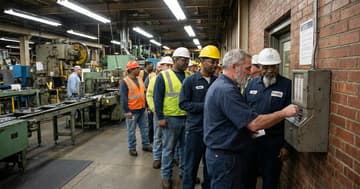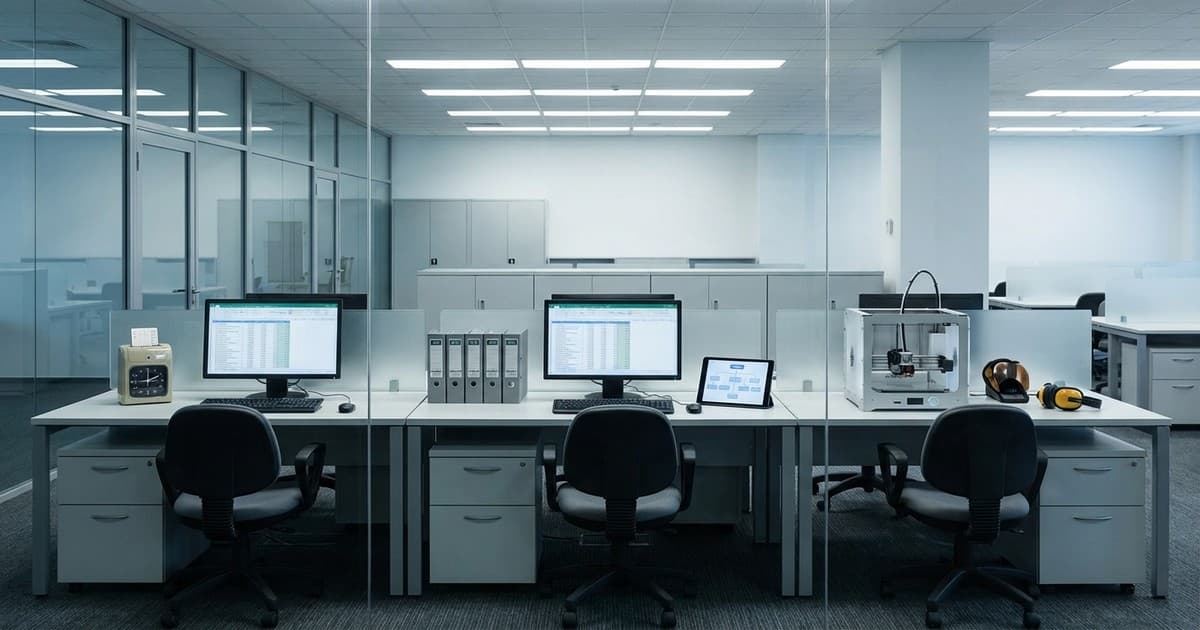
The shadow of the steam engine still hangs over the modern glass-walled office and the remote worker’s laptop. While we have traded coal dust for cloud computing, the underlying architecture of how we spend our time remains anchored in the nineteenth century. Most organizations still treat human labor as a mechanical input to be standardized, measured, and optimized. This persistent factory logic in modern work dictates everything from our alarms to our value.
Understanding these industrial leftovers is essential for anyone trying to navigate the friction of the digital age. By examining the legacy of the assembly line, we can see why our current systems often feel so poorly suited to creative and intellectual labor. From rigid schedules to the obsession with quantitative output, the industrial ghost continues to haunt our daily routines, often at the expense of genuine innovation and worker well-being.
The rigid eight-hour workday
The eight-hour workday is perhaps the most visible relic of the textile mill. Originally designed to balance factory shifts and ensure machines never stopped running, this rigid block of time has survived into the era of asynchronous remote work. We still struggle to decouple productivity from the clock, even when tasks require bursts of creativity rather than steady manual repetition. This Industrial Revolution legacy keeps us tethered to a static schedule.
Presence as a proxy for productivity
Managerial logic remains clear in our demand for physical or digital presence. In factories, a worker away from their station meant a break in the production chain. Today, this manifests as "green dot" anxiety on messaging apps. Managers often equate visibility with value, assuming that if an employee is not actively typing or attending a meeting, they are not contributing. This bias prioritizes being seen over achieving meaningful, high-level objectives.
The obsession with quantitative metrics
Modern workplace productivity metrics often mimic the counting of widgets on a belt. We measure emails sent, lines of code written, or tickets closed, prioritizing volume over the nuances of quality or strategic impact. This quantitative bias forces employees to focus on "busy work" that can be easily logged in a spreadsheet. It reflects the standardized benchmarks of an early twentieth-century assembly plant where every movement had a specific value.
The division between thinking and doing
Taylorism in office life is evident in the strict division between those who strategize and those who execute. This hierarchy was designed to simplify tasks for unskilled labor, but in a knowledge economy, it creates bottlenecks. When decision-making power is concentrated at the top, frontline workers are often treated as cogs in a machine. They are expected to follow protocols rather than apply their unique expertise to solve complex, non-linear problems.
Linear project management
Our software tools frequently enforce a linear progression that mirrors a manufacturing line. Projects are broken down into discrete, sequential steps where one person's output becomes the next person’s raw material. While this provides structure, it often fails to account for the iterative nature of modern problem-solving. It treats cognitive tasks as predictable steps in a mechanical process rather than dynamic loops of learning and adjustment.
The drive for constant throughput
The drive for infinite throughput pushes employees toward a state of constant acceleration. In a factory, increasing the speed of the belt yields more profit; in a digital office, this translates to faster response times and shorter deadlines. This relentless pace ignores human biological limits, treating the mind as a processor that can be overclocked. It assumes the more tasks we process, the better the system functions, regardless of long-term fatigue.
Digital surveillance as oversight
Digital surveillance has become the high-tech version of the factory floor overseer. Screen-recording software and activity trackers monitor every movement, creating a culture of distrust. This type of monitoring treats professionals as untrustworthy components that must be watched to prevent "shrinkage" of time. It effectively turns the home office into a data-driven factory floor where every keystroke is tracked, leaving little room for autonomy.
Treating talent as interchangeable parts
Finally, the trend toward the gig economy often treats workers as interchangeable parts. Just as a factory manager could replace a loom operator overnight, many modern platforms view human talent as a fluid, depersonalized resource. This commoditization of labor strips away the social contracts of the past, reducing the relationship between employer and employee to cold, transactional interactions. It reinforces the idea that the role matters more than the individual.
Breaking the assembly line mentality
The persistence of industrial-era structures suggests that we are still in a period of transition. While our tools have changed, our management philosophies are lagging behind the realities of the twenty-first century. Moving beyond factory logic in modern work requires a fundamental shift in how we value human contribution. We must prioritize autonomy and outcome over mere activity if we hope to build a more sustainable and effective landscape for the future.
Ultimately, recognizing these eight patterns allows us to question whether they still serve a purpose or if they are merely habits of a bygone era. The future of work will likely be defined by our ability to break the assembly line mentality. By doing so, we can finally embrace the flexibility and creativity that the digital age was originally supposed to provide. Leaving the smoke-and-iron logic behind is the first step toward a humanized workplace.