Modern offices often present themselves as bastions of digital innovation, yet their foundational structures are deeply rooted in the 19th century. Many of our daily professional habits are actually industrial workplace legacies inherited from the era of steam-powered machinery. The concept of the standardized workday and the rigid separation between management and labor were designed to optimize assembly lines, not creative thought. By examining these historical carryovers, we can understand why many contemporary businesses still struggle to adapt to the flexibility of the information age. Acknowledging these origins is the first step toward building more efficient and human-centric professional environments.
The Persistence of Standardized Work Hours
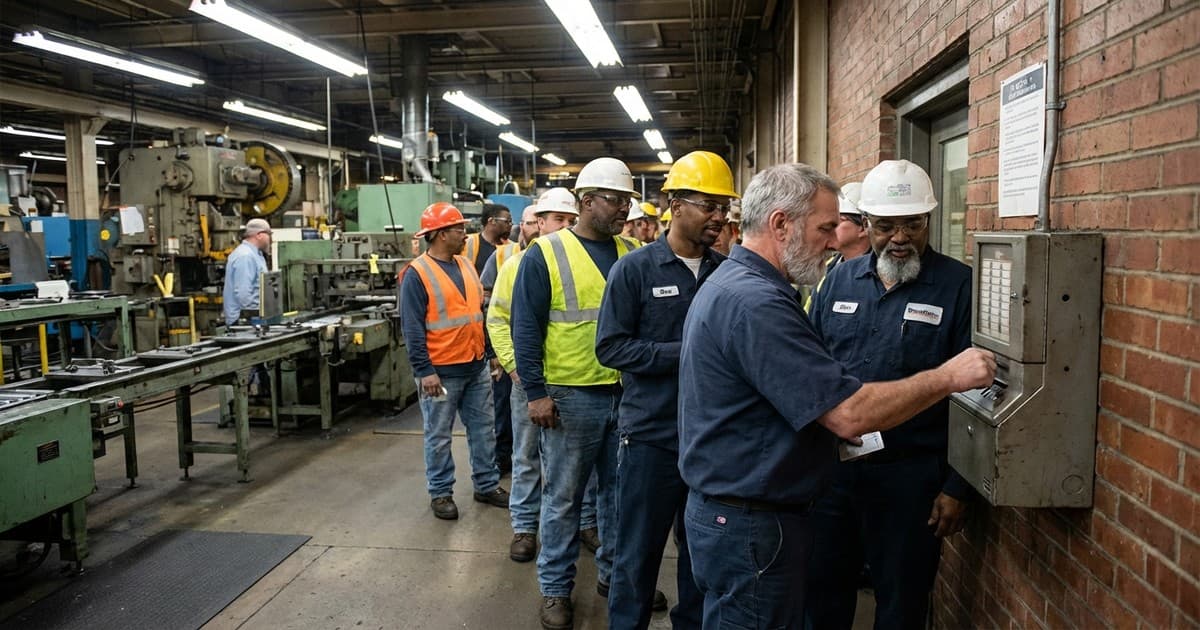
One of the most enduring remnants of early industrial systems is the concept of standardized work hours. Before the Industrial Revolution, work followed natural agrarian cycles. However, the need to keep expensive machinery running led to the implementation of strict shifts and the invention of the punch clock. Today, even in industries where tasks are not time-dependent, the 'nine-to-five' remains the default setting. This adherence to a uniform schedule often ignores individual biological rhythms and peak productivity windows, prioritizing administrative tracking over actual cognitive output or project success.
Hierarchical Power and Supervision
The architecture of the modern corporate ladder is a direct descendant of factory model management. Early industrial owners required a layer of foremen to oversee manual laborers and ensure discipline. This created a top-down command structure that persists in many of today’s bureaucratic organizations. While digital tools have enabled more collaborative workflows, the legacy of the 'supervisor' often manifests as micromanagement. This historical preference for surveillance over autonomy can stifle employee engagement and limit the rapid decision-making necessary in a fast-paced, modern global economy.
The Myth of Physical Proximity
The belief that work only happens within the four walls of a company building is another of the powerful industrial workplace legacies. In the factory era, physical presence was mandatory because the tools of production were stationary. In the digital age, where most tools are portable and cloud-based, the insistence on office attendance often stems from a lingering distrust of workers. This pressure for presenteeism suggests that being seen at a desk is equivalent to being productive, a metric that is increasingly irrelevant in roles defined by problem-solving rather than physical repetitions.
Evolving toward a modern corporate culture requires a conscious decoupling from these outdated industrial norms. Organizations that successfully transition from monitoring hours to measuring results often report higher levels of job satisfaction and innovation. By moving away from the assembly-line mentality, businesses can foster environments where trust and flexibility drive performance. The shift toward a results-oriented work environment allows for a more diverse range of work styles, ultimately benefiting both the employer and the employee through increased efficiency and reduced burnout.
Conclusion
In summary, many aspects of our current professional lives are not universal truths but historical carryovers. Recognizing industrial workplace legacies provides a necessary lens for criticizing and improving our organizational structures. As we move further into the 21st century, the challenge for leaders will be to dismantle these rigid factory-era foundations in favor of systems that respect human psychology and cognitive health. Embracing this change will lead to a more sustainable, adaptable, and genuinely productive future for the global workforce.