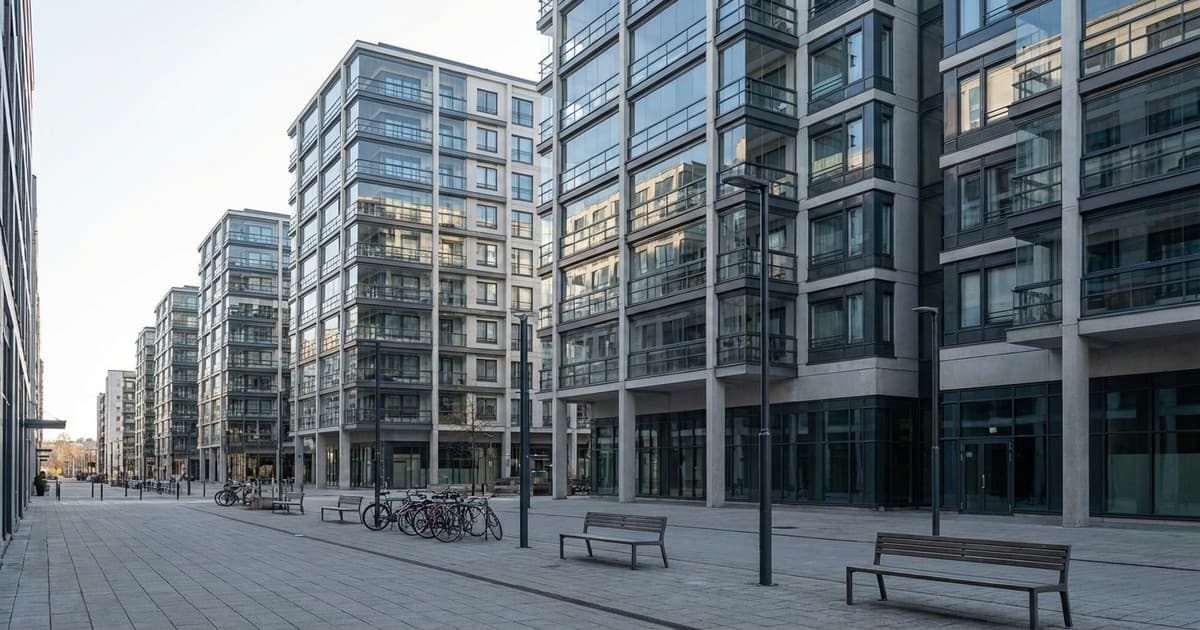
Walk through any major city today—from Berlin to Seoul—and you will likely see the same glass-and-steel residential blocks. This visual repetition is not a coincidence; it is the result of a globalized industry. From shared materials to universal codes, modern apartment design has prioritized efficiency and predictable returns over local aesthetics. This shift has changed how we live and how cities evolve, creating a unified architectural language.
The economic logic of standardization
The primary drivers of this architectural uniformity are globalized supply chains, standardized safety regulations, and the financialization of real estate. When developers use the same blueprints and materials across different climates, production costs drop. By streamlining the process, firms minimize risk and ensure a building in London meets the same expectations as one in Sydney. This consistency makes properties easier to value and sell to international investors.
Modern construction relies heavily on prefabricated components and modular systems. These elements are manufactured in a few global hubs and then shipped worldwide. Using standardized window frames, elevators, and HVAC systems reduces custom engineering costs. For a developer, a unique design is often seen as a liability because it introduces unpredictable expenses and delays that can erode the profit margins of a large-scale housing project.
Regulations and the death of regionalism
International building codes and sustainability certifications like LEED also play a significant role. These standards dictate everything from insulation thickness to window-to-wall ratios. As more countries adopt similar environmental targets, architects are forced into a narrow range of design solutions. The result is a form-follows-regulation approach, where the exterior is determined by thermal performance rather than regional tradition or artistic flair.
Real estate as a global asset class
Furthermore, the rise of real estate as a global asset class has homogenized the market. Large institutional investors prefer assets that are familiar and easy to manage. A high-end apartment building follows a specific template because that template is proven to attract tenants and maintain value. When buildings are treated primarily as financial instruments, local character is often discarded in favor of a globally recognizable aesthetic.
The sameness of modern housing reflects a world where efficiency and capital flow dictate the shape of our skylines. While we may lose the distinct regional textures that once defined our cities, the shift toward standardized building methods has allowed for faster and more energy-efficient construction. As we move forward, the challenge for architects will be finding ways to reintroduce local identity without sacrificing the practical benefits of our globalized systems.