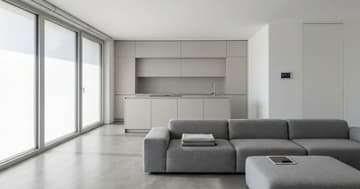
The evolution of modern home design has shifted toward a specific type of efficiency. In recent years, architects and developers have prioritized the "frictionless" lifestyle—minimizing maintenance and maximizing speed. While these developments make daily tasks easier, they often overlook the sensory needs of the residents. We are building environments that serve our schedules rather than our well-being.
This trend is driven by a desire for visual cleanliness and the integration of technology. However, the result is often a living space that feels more like a high-functioning showroom than a sanctuary. By analyzing current residential architecture, we can identify eight specific ways that our pursuit of convenience is actively eroding the physical and psychological comfort of the home.
1. The acoustic cost of open-plan living
The open-plan layout is a hallmark of modern residential architecture. It creates a seamless flow that allows for easy supervision and effortless social hosting. However, this convenience comes at a significant acoustic cost. Without walls to buffer sound, the noise of a dishwasher or a television permeates every corner. This constant auditory bleed strips the home of the quiet sanctuary required for true mental rest.
2. Smart technology as a hidden chore
Integrating smart home technology is intended to simplify life through automation and remote control. While it is convenient to adjust a thermostat from a phone, the reality often involves software updates and connectivity issues. This creates a "digital overhead" that adds low-level stress. The tactile simplicity of a manual switch is replaced by a complex system that demands constant cognitive attention.
3. The coldness of minimalist surfaces
Modern aesthetics favor hard, non-porous surfaces like polished concrete, quartz, and metal. These materials are chosen because they are incredibly easy to sanitize and maintain. Unfortunately, they are also thermally cold and acoustically reflective. By eliminating soft textures that absorb sound and hold heat, modern home design creates a sterile environment that lacks the physical warmth essential for relaxation.
4. Harsh lighting for high visibility
Recessed LED lighting has become the standard for modern interiors because it provides uniform brightness and a clean ceiling line. While this is highly functional for performing tasks, it lacks the layered warmth of traditional lamps. The high-intensity, overhead nature of this lighting can disrupt circadian rhythms. We trade the soft, atmospheric glow that signals the body to wind down for the sterile clarity of an office.
5. Thermal instability from glass walls
Floor-to-ceiling windows offer beautiful views and an abundance of natural light, which is a major selling point for modern buyers. Yet, large glass spans are notorious for poor insulation compared to traditional walls. Even with high-performance glazing, residents often experience "cold spots" in winter and greenhouse-like heat in summer. This forces a reliance on HVAC systems rather than the passive comfort of solid construction.
6. Hard flooring over joint health
Luxury vinyl and hardwood have largely replaced carpeting because they are easier to clean and better for allergy sufferers. While these floors are convenient for maintenance, they lack the ergonomic design needed for long-term standing. Walking on unyielding surfaces throughout the day puts more strain on the joints and feet. The ease of a quick sweep is prioritized over the physical impact on the body’s comfort.
7. The loss of private nooks
Efficiency in modern floor plans often means eliminating "wasted space," such as alcoves, deep hallways, or small dens. While this maximizes square footage, it removes the small, enclosed spaces where humans naturally feel secure and tucked away. Without these nooks, every activity happens in a large, exposed area. This lack of enclosure can lead to a subconscious feeling of vulnerability and a loss of personal intimacy.
8. Form-focused kitchen islands
The oversized kitchen island is the ultimate symbol of modern convenience, serving as a prep station, dining table, and desk. However, sitting on a high barstool for an extended period is rarely as comfortable as a standard chair at a dining table. By consolidating these functions into one monolithic structure, we lose the varied seating options that cater to different physical needs and social dynamics throughout the day.
Ultimately, the tension between convenience and comfort reflects a shift in how we value our time at home. We have become experts at optimizing our houses for performance and speed, yet we are left with spaces that feel emotionally thin. Reclaiming true comfort requires a deliberate departure from the trend of total transparency and hard-edged efficiency.
To create a home that truly restores us, we must balance modern utility with the timeless human need for softness, privacy, and quiet. Recognizing that a house is more than a tool for living allows us to design environments that support our physical and mental health. Comfort is not a luxury to be traded for ease; it is the fundamental purpose of a home.