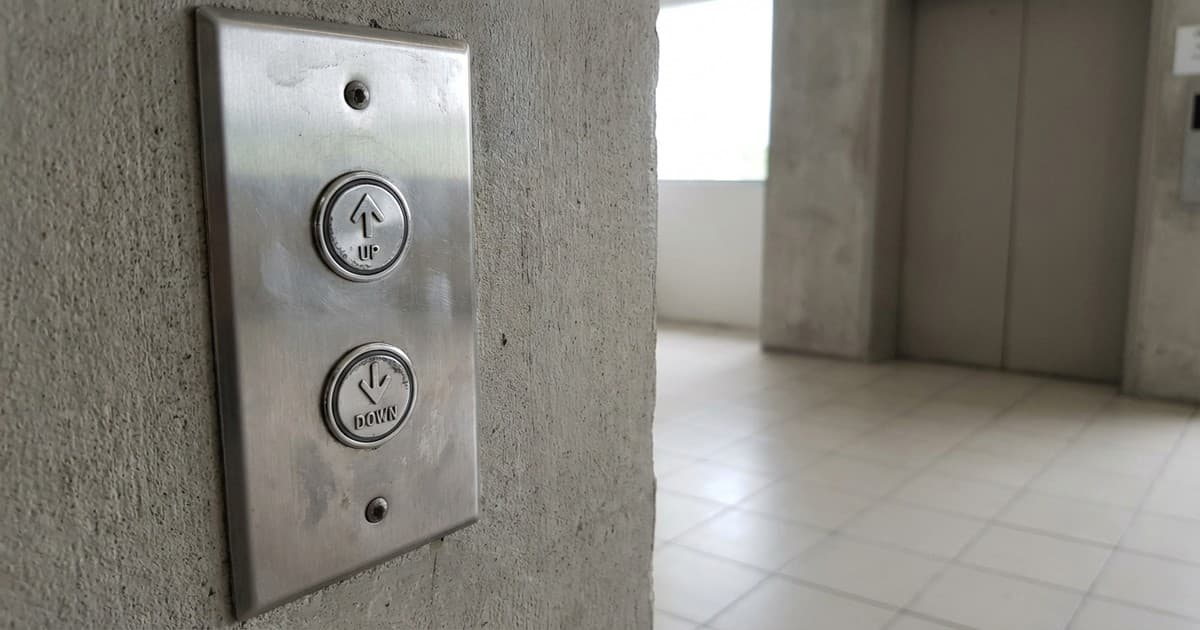
We often stand in front of elevator banks, pressing the illuminated arrows with little thought. While it seems like a simple request for a ride, that interface is the front end of a complex mathematical puzzle. Most modern buildings rely on a system that requires knowing your intended direction before the doors ever open.
The reason elevators have both up and down buttons is to signal the passenger's intended direction to the controller, allowing it to assign the most efficient car. This logic, known as collective control, prevents a car from stopping for someone going down when the elevator is already full of people heading to the top floor.
The logic of collective control
Without these directional hall calls, an elevator would have to stop at every floor where a button was pressed, regardless of where the car was actually going. This would result in a chaotic, stop-and-start journey that would significantly increase wait times and wear out the mechanical components much faster than necessary.
Modern elevators run on sophisticated algorithms designed to minimize the Estimated Time to Arrival. By knowing you want to go down, the system can bypass your floor if the current car is moving up to a higher floor first. It only stops for you when a car is moving in your direction or has finished its current run.
The cost of pressing both buttons
Many passengers mistakenly believe that pressing both buttons—or pressing one button repeatedly—will make the elevator arrive faster. In reality, this often slows down the entire building. It creates ghost stops where a car opens its doors for a passenger who has already departed on a different elevator, wasting time for everyone else.
In newer high-rise developments, you might notice the up and down buttons are disappearing entirely. These buildings use destination dispatch systems, where you select your specific floor on a keypad before entering. This takes efficiency a step further by grouping people going to the same floor into the same car.
An orderly vertical journey
Understanding the logic behind those two simple arrows reveals the hidden complexity of urban transit. While they may seem like a minor detail, these buttons are the primary way we communicate with the building’s brain. They ensure that thousands of daily trips remain orderly, predictable, and energy-efficient in our vertical world.