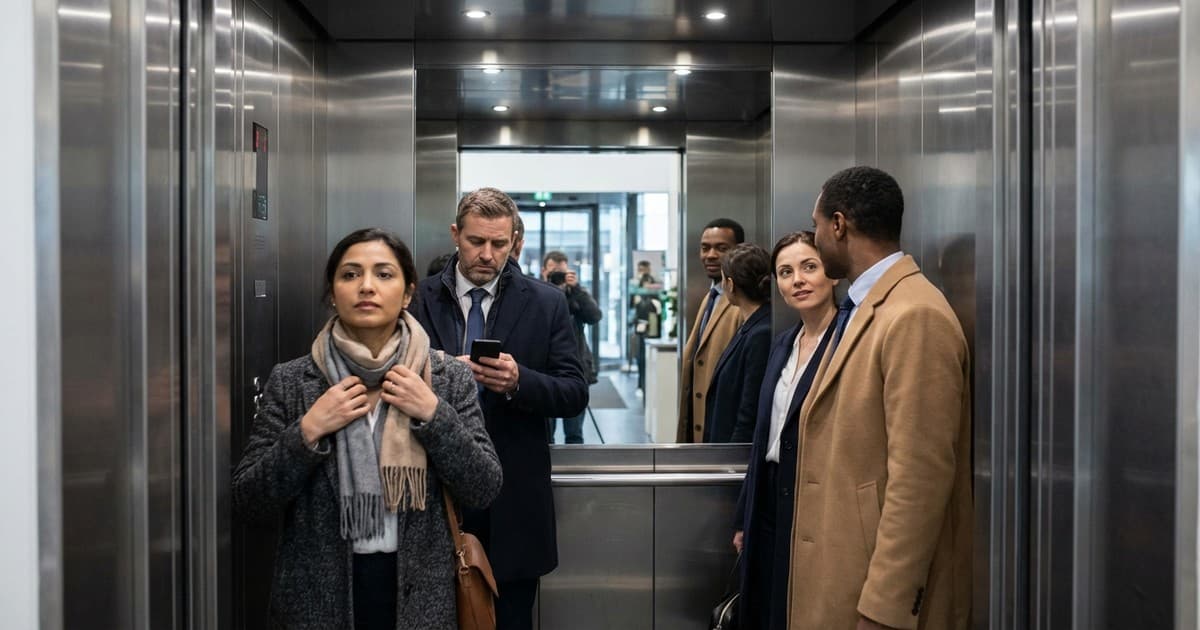
Most people assume the mirrors in an elevator are there for a quick vanity check or to adjust a tie before a meeting. While they certainly serve that purpose, the primary reason for their installation is rooted in deep human psychology. Building managers realized decades ago that mirrors reduce perceived wait times and alleviate claustrophobia by distracting the passenger’s brain.
This clever design choice transformed the modern user experience, making the short journey feel significantly faster than it actually is today. By shifting focus away from the mechanical movement, the mirror became an essential tool for passenger satisfaction. It effectively addresses both the physical limitations of the cab and the mental state of the rider during transit.
Reducing the perceived wait time
During the post-war building boom, taller skyscrapers led to complaints about slow elevator speeds. Engineers found that making elevators faster was prohibitively expensive at the time. Instead of fixing the machinery, they decided to fix the passenger's boredom. By installing mirrors, they gave people something to look at, which effectively shortened the felt duration of the ride without changing the elevator's actual speed.
Improving accessibility and safety
Beyond psychological tricks, mirrors serve a vital functional role for accessibility. For individuals using wheelchairs, maneuvering in a cramped elevator cab can be exceptionally difficult. A mirror allows a wheelchair user to see what is behind them, enabling them to back out of the cab safely without needing to perform a full turn. This inclusive design feature remains a standard requirement in many modern building codes to ensure equal access.
Safety is another factor in why elevators have mirrors. In a small, enclosed space with strangers, a mirror provides a panoramic view of the entire cab. This visibility allows passengers to see the hands and movements of others, which acts as a deterrent for pickpocketing or harassment. The reflection provides a sense of security and awareness that helps passengers feel more comfortable during transit in busy urban high-rise buildings.
Alleviating claustrophobia
For many people, stepping into a windowless metal box is an anxiety-inducing experience. Mirrors help alleviate claustrophobia by creating the illusion of more space and depth. By reflecting the interior, the mirror tricks the eye into perceiving the cab as larger than its physical dimensions. This reduction in confinement is essential for comfort, especially in older buildings where elevator shafts and cabs are often notably narrow.
Today, mirrors in elevators are so common that we rarely stop to consider their purpose. They represent a perfect intersection of engineering, safety, and psychology. By addressing human impatience and the fear of confined spaces, these reflective surfaces solve complex architectural problems with a remarkably simple solution.
Whether improving accessibility or offering a distraction, mirrors ensure the vertical journey remains a seamless part of urban life. They prove that the most effective way to improve technology is to focus on the human experience rather than just the speed of the machine.