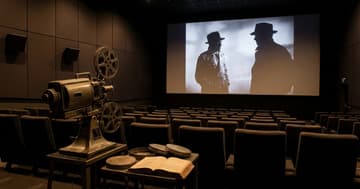
For decades, television was defined by the commercial break and the week-long gap between episodes. Writers had to master the cliffhanger to ensure viewers returned after seven days. However, the rise of on-demand services has fundamentally altered these creative constraints. The streaming content evolution has shifted the focus from fleeting hooks to immersive, long-form narratives that assume the audience is watching in one sitting.
This shift began with the disappearance of the "previously on" segment. In the broadcast era, writers spent significant screen time repeating plot points to accommodate casual viewers. Today, storytelling is denser and more complex. Writers no longer fear losing an audience that missed a week; they write for a viewer who remembers what happened ten minutes ago, allowing for intricate setups that pay off hours later.
The rise of the ten-hour movie
Traditional episodic television relied on a procedural format where problems were introduced and solved within forty-two minutes. Streaming has largely killed this structure in favor of serialized arcs. Shows are now often conceived as single, continuous stories divided into chapters. This allows for deeper character exploration and slower pacing that would have been deemed risky by network executives in previous decades.
However, this new freedom comes with its own set of challenges. Critics often point to mid-season sag, where stories feel stretched to meet a specific runtime. Without the rigid structure of broadcast acts, some series struggle to maintain momentum. The binge-watching impact means writers must now balance a steady narrative flow with enough variety to keep a viewer from clicking away to a different title on the same platform.
How algorithms influence the script
Behind the scenes, the creative process is no longer driven solely by intuition. Streaming giants use massive amounts of data to determine what audiences want. If data shows viewers drop off during slow dialogue scenes, writers may be pressured to increase the action. This marriage of art and analytics has created a new kind of narrative pressure, where the first ten minutes of a pilot are engineered specifically to prevent churn.
These platforms also favor global storytelling. Because streaming services operate in hundreds of countries simultaneously, writers are moving away from hyper-local references. They are leaning into universal themes—power, family, and survival—that translate easily across borders. This has led to a more accessible style of drama that resonates globally, further defining modern narrative structures.
A new era of creative risks
Despite the influence of data, the streaming era has also unlocked niche genres that once struggled on broadcast TV. Experimental formats and high-concept sci-fi now find dedicated homes because they do not need to appeal to thirty million people at once. A hit is now defined by engagement and subscriber retention rather than raw overnight ratings, giving creators more room to subvert traditional tropes and take narrative risks.
As we look at the state of entertainment today, it is clear that the medium has dictated the message. The transition from appointment viewing to infinite choice has forced writers to become more disciplined and more daring. While some classic techniques have vanished, the ability to tell a cohesive, novelistic story on screen has never been more refined. The audience has changed, and the art form has matured to match it.