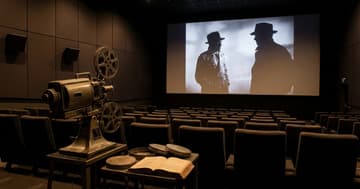
Cinema and television have always operated within boundaries. From the strictures of the Hays Code in mid-century Hollywood to modern broadcast standards, film and TV censorship has acted as a silent co-author of history’s most famous scenes. Rather than stifling creativity, these limitations often forced directors to use metaphor, suggestion, and technical loopholes. These choices resulted in more nuanced art, proving that many iconic moments were survival tactics.
The creative tension of the Hays Code
For decades, the Motion Picture Production Code, better known as the Hays Code, governed American screens. One of its most famous mandates prohibited showing a married couple in the same bed. This rule led to the 'one foot on the floor' trope and the prevalence of twin beds in classic films. To circumvent this, filmmakers mastered the art of chemistry through dialogue and lingering glances, creating a tension that explicit scenes often lack today.
Censorship also dictated how villains met their ends. Under the Code, no crime could go unpunished, and no method of killing could be shown in graphic detail. This forced Alfred Hitchcock to innovate in the 1960 thriller Psycho. Since he could not show a knife entering flesh, he used rapid-fire editing and a jarring score. This sequence became one of the most famous in history, proving that what we do not see is often scarier than the alternative.
Mastering the three-second rule
Physical affection was once timed by the second. The Code restricted on-screen kisses to just three seconds. In Notorious, Hitchcock worked around this by having Cary Grant and Ingrid Bergman break their embrace every few seconds to whisper or nibble an ear before resuming. This technical loophole created an intensely intimate sequence that felt far more erotic to audiences than a single, continuous shot allowed by the strict regulations of the era.
Breaking barriers on the small screen
On the small screen, network 'Standards and Practices' departments held similar power. In the 1960s, Star Trek famously featured what is often cited as the first interracial kiss on US television. Concerned about backlash, the network tried to film a version where the characters did not actually touch. William Shatner deliberately flubbed those takes, forcing the network to use the kiss. The moment became a landmark for social progress in a restricted medium.
Today, the landscape has shifted toward ratings systems and local broadcast regulations. While streaming services offer more freedom, global markets introduce new pressures. Studios often film alternate scenes to satisfy international censors, such as removing specific political symbols. These modern adjustments show that while the codes have changed, the negotiation between artistic vision and regulatory approval remains a central part of production.
The lasting legacy of creative restriction
The history of the screen is a history of negotiation. While we often view censorship as a purely negative force, it has undeniably shaped the visual language of the 20th and 21st centuries. By denying creators the ability to be literal, regulations compelled them to be poetic. The most memorable moments in entertainment were rarely the result of total freedom. Instead, they were born from the friction between imagination and the rigid lines of the law.