A century ago, the rhythm of the day followed the sun and the seasons. Today, the density of the concrete jungle has introduced a new, accelerated pace. As populations migrated to metropolitan hubs, urban living habits underwent a profound transformation, moving away from community-reliance toward individual convenience and digital connectivity. This shift was gradual, often unnoticed by those living through the change.
The acceleration of daily schedules
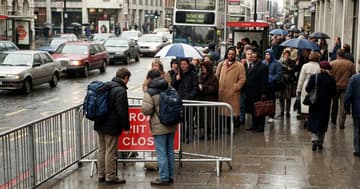
One of the most significant changes involves our relationship with time. In rural settings, time was cyclical. In the modern city, it is linear and fragmented. The commute, once a rare occurrence, now dictates the morning and evening of millions. This ongoing city life evolution has made every minute a commodity to be managed, prioritizing efficiency over the slower, traditional movements of the past.
The erosion of the domestic sphere
This compression has also altered how we consume food and goods. The rise of the supermarket and the delivery economy replaced the local market and home production. This shift in the metropolitan lifestyle is a behavioral adaptation to a lack of time and space in cramped apartments. City dwellers now prioritize speed over provenance, changing the kitchen from a production center to a reheating station.
Social friction in a dense landscape
Socially, city life has redefined community. While density suggests more interaction, it often leads to urban anonymity. The urbanization impact on our social fabric means we live closer to others but know our neighbors less. To compensate, we have turned to third spaces like cafes and gyms to find the social friction and casual connections that were once a natural, unavoidable part of village life.
The permanent disruption of natural cycles
Even our internal clocks have been rewired by the urban environment. The advent of pervasive street lighting and the 24-hour economy has effectively ended the natural day-night cycle. Urbanites now sleep less and experience higher levels of cognitive load. This constant stimulation has made silence and darkness luxury goods rather than standard features of human existence, fundamentally altering our biological rest patterns.
Urbanization is more than a shift in geography; it is a fundamental rewiring of the human experience. As we look back over the last hundred years, it is clear that our environment dictates our behavior. While the city offers unparalleled efficiency and opportunity, it demands a constant negotiation with our biological needs. Understanding these quiet changes is essential for designing more human-centric cities in the decades to come.