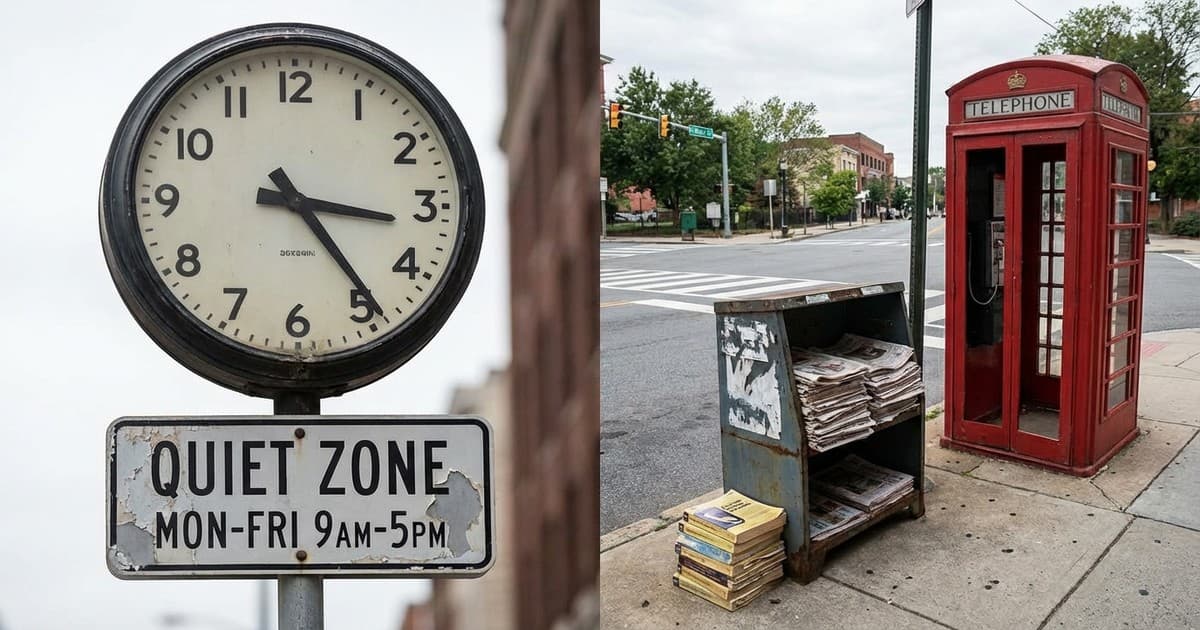
Modern life moves at a breakneck pace, yet our behavior is often governed by invisible scripts written in a different century. These outdated social rules persist due to cultural inertia rather than utility. We follow them without questioning their relevance to our lives today. Many of our daily habits are simply echoes of past necessities that have long since expired and no longer serve a logical purpose.
Identifying these vestigial customs allows us to reclaim our time and mental energy. By examining the history behind these common habits, we can decide which are worth keeping. Here are ten rules we follow that no longer make sense in our modern landscape, ranging from workplace etiquette to personal hygiene myths that have been scientifically debunked for years.
1. The arbitrary 40-hour work week
The standard five-day, 40-hour work week was a massive victory for labor rights in the early 20th century. However, in an era of automation and digital efficiency, this rigid block of time often leads to performative busyness rather than actual productivity. Many modern roles could be completed in far less time, yet we remain tethered to the clock out of tradition rather than a need for output or effective collaboration.
2. Waiting 30 minutes to swim after eating
Generations of children grew up waiting on the pool deck after lunch, fearing that digestion would cause fatal cramps. This rule is a medical myth. While a full stomach might make you feel sluggish or slightly uncomfortable during a vigorous workout, there is no evidence that eating leads to the kind of incapacitating muscle failure that would cause drowning. It is a safety precaution that simply lacks a scientific basis.
3. Changing engine oil every 3,000 miles
For decades, the 3,000-mile oil change was the gold standard for vehicle maintenance. While this was necessary for older engines and mineral-based oils, modern automotive technology has rendered it obsolete. Most cars built in the last decade utilize synthetic blends and advanced sensors. Following this rule today is largely a waste of resources, as most manufacturers now recommend intervals between 7,500 and 10,000 miles.
4. Avoiding white clothing after Labor Day
This fashion mandate originated as a way for high-society families in the late 19th century to distinguish themselves from the "new money" class. It was a status symbol indicating one could afford to travel away from the dusty city during summer months. In the modern world, where fashion is an expression of personal style rather than class warfare, the rule feels entirely irrelevant and unnecessarily restrictive for a winter wardrobe.
5. The five-second rule for dropped food
The five-second rule suggests that food remains safe to eat if retrieved quickly from the floor. However, bacteria transfer is instantaneous upon contact. Scientific studies show that the type of surface and the moisture level of the food matter far more than the duration of the fall. While a dry cracker on a clean rug might be low risk, the timing itself offers no biological protection against immediate bacterial contamination.
6. Keeping your salary a secret from colleagues
Many employees still feel that discussing compensation is a professional taboo. This social rule was largely designed by corporations to prevent collective bargaining and keep labor costs low. In the modern era, pay transparency is becoming a legal requirement and a social expectation. Breaking this silence helps ensure pay equity and allows workers to understand their true market value without the shroud of unnecessary corporate secrecy.
7. The necessity of a diamond engagement ring
The idea that a diamond is the only acceptable stone for an engagement was a masterclass in 1940s marketing by De Beers. Before this campaign, various gemstones were used for betrothals. Today, lab-grown diamonds and alternative stones like moissanite offer identical beauty and higher ethical standards at a fraction of the cost. The rule requiring a multi-month salary investment in a single rock is a tradition built on advertising, not history.
8. Using "Dear" in every professional email
The formal salutation "Dear" has been the standard for letter writing for centuries. However, the rise of instant messaging platforms like Slack and Teams has fundamentally changed professional communication. While formality still has its place in legal or high-stakes correspondence, a simple "Hi" or jumping straight to the person's name is now the functional norm. Sticking to Victorian-era formality can often make a colleague feel distant or stiff.
9. Requiring cursive in the digital age
There was a time when elegant penmanship was the primary indicator of a proper education. Today, the heavy emphasis on cursive in schools is often a point of contention. While it remains a useful motor skill, its functional necessity has vanished in an era of digital communication. Teaching children to navigate a keyboard or basic coding is now far more critical than mastering the loops of a formal signature that they will rarely use.
10. Rinsing raw chicken in the sink
Rinsing raw poultry is a kitchen habit passed down to "clean" the meat before cooking. However, food safety experts confirm that this practice does more harm than good. Splashing water actually spreads dangerous bacteria like Salmonella across your countertops and nearby surfaces. The only effective way to kill pathogens is through proper cooking temperatures, making the traditional pre-wash a dangerous and unnecessary redundancy.
Social norms provide the structure that keeps society functioning. However, when these rules outlive their original purpose, they become burdens rather than benefits. Continuous evaluation is the key to progress. By letting go of these outdated practices, we create space for more logical ways of living. Traditions should serve the people who practice them, not the other way around. It is time to update our cultural software for good.