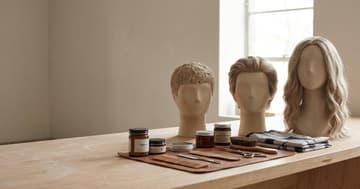
Hair has long served as a biological billboard, signaling health and status. Whether trailing down the back or cropped close to the scalp, length carries a weight that transcends fashion. Recent psychological studies continue to investigate which styles resonate most deeply with observers. While beauty is inherently subjective, a consistent pattern has emerged among those studying the nuances of human attraction.
Modern data suggests that medium-to-long hair, specifically reaching the mid-back or shoulder blades, is widely considered the most attractive hair length for women. This preference is not merely a trend of early 2026 but is rooted in long-standing evolutionary signals. Longer hair often suggests vitality and physical well-being, influencing first impressions long before a conversation even begins.
The evolutionary signal of length
Evolutionary psychologists argue that hair length acts as a proxy for a person's health history. Because hair grows slowly, a long, lustrous mane indicates several years of good nutrition and the absence of chronic illness. This biological "receipt" makes longer styles a powerful signal of reproductive fitness. Consequently, observers often lean toward these lengths when assessing physical appeal in others.
However, the "most attractive" designation does not necessarily mean the longest possible hair. Research often shows a bell curve in preference. While very short hair can be striking and long hair traditional, the peak of the curve usually sits at the mid-back. Hair that is too long can sometimes be perceived as unkempt, potentially obscuring a person's facial features and overall silhouette.
Shifting standards for men and modern culture
For men, the metrics shift significantly. Traditional preferences still lean toward shorter, well-groomed styles, though medium lengths have gained substantial ground in recent years. Trends now favor styles that balance neatness with texture. For many observers, the most attractive hair length on a man is one that appears intentional rather than neglected, often falling between a classic crop and chin-length.
Cultural context also plays a pivotal role in how we perceive attractive hair length. In many Western societies, the "long bob" has seen a resurgence as a symbol of modern sophistication. It bridges the gap between the perceived health of long hair and the perceived competence of shorter styles. This versatility makes it a frequent favorite in both professional and social environments today.
Balancing features with personal style
Beyond general statistics, the shape of the face is the ultimate arbiter of what looks best on an individual level. Stylists often note that hair length should complement bone structure rather than follow a rigid rulebook. An attractive length is one that creates visual balance, drawing the eye to the wearer’s best features. What works for a round face may differ entirely for someone with an angular jawline.
Ultimately, while science highlights a preference for medium-to-long hair, the most attractive length is often the one maintained with the most care. Confidence and hair health are far more influential than a specific measurement in inches. Understanding these trends provides a useful baseline, but personal expression remains the most vital component. The best look is one that aligns with your lifestyle and identity.