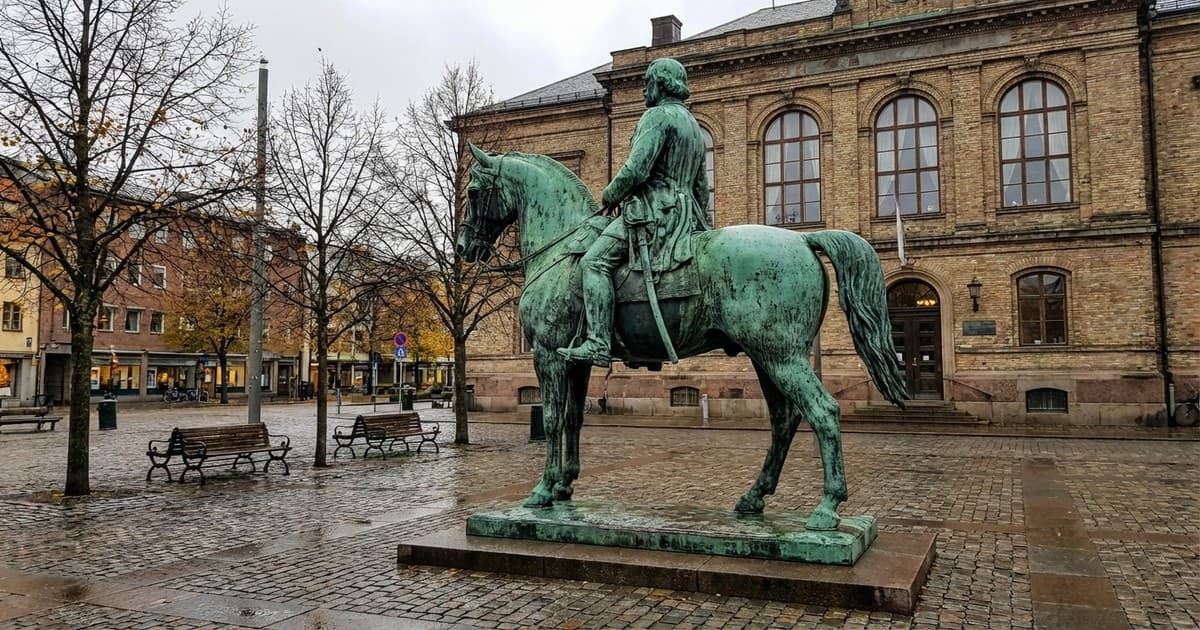
History is often written by the victors, but it is also shaped by generations of storytellers who prefer a good narrative over a dry truth. Over the decades, certain misconceptions have become so deeply embedded in our collective memory that they are taught in classrooms as undisputed reality. From the attire of ancient warriors to the supposed discoveries of famous explorers, these historical myths continue to circulate despite evidence to the contrary.
Correcting these records requires more than just skepticism; it demands a closer look at the primary sources that define our past. As we analyze these common errors, we find that many were created for political gain, dramatic effect, or were simply the result of poor translation. Here are 11 instances where the popular version of history does not match the proven facts.
1. Vikings never wore horned helmets
Archaeological evidence confirms that Vikings never wore horned helmets. This imagery actually stems from 19th-century opera costume designers, specifically for Richard Wagner’s "Ring" cycle. While the horns made for a more menacing stage presence, they would have been a massive liability in actual hand-to-hand combat, making it easy for an opponent to knock the helmet off.
2. Napoleon was not exceptionally short
Napoleon Bonaparte stood at roughly 5 feet 7 inches, which was actually slightly taller than the average Frenchman of his era. The confusion arose from differences between French and English measurements, coupled with British propaganda that sought to diminish his stature. His habit of surrounding himself with an elite guard of very tall soldiers only reinforced the optical illusion of his smallness.
3. Marie Antoinette and the cake
There is no historical record of Marie Antoinette saying "Let them eat cake." The phrase first appeared in Jean-Jacques Rousseau’s "Confessions," attributed to a nameless "great princess." It was written when Antoinette was still a child living in Austria. Later, revolutionaries used the line to characterize her as heartless, and the label eventually stuck as historical fact.
4. The shape of the Earth in 1492
By the time Christopher Columbus sailed, educated Europeans already knew the Earth was round. The debate wasn't about the shape of the planet, but rather its size. Columbus underestimated the circumference of the globe, leading him to believe he could reach Asia much faster than was physically possible. He wasn't proving the world was a sphere; he was simply making a lucky navigational error.
5. Einstein's performance in school
The story that Albert Einstein failed mathematics as a student is entirely false. He had mastered differential and integral calculus by the age of 15. The myth likely began because the grading system in Switzerland was reversed during his time there. To an outside observer looking at his transcripts, his top marks appeared to be failing grades, creating a narrative that comforted struggling students everywhere.
6. Visibility of the Great Wall
Despite a persistent legend, the Great Wall of China is not visible to the naked eye from space. Astronauts have confirmed that the structure blends in too well with the natural landscape. It is generally no wider than a modern highway, making it impossible to spot from orbit without assistance. In low Earth orbit, it is only visible under perfect conditions with high-powered camera lenses.
7. Executions in Salem
No one was burned at the stake during the Salem witch trials. Of the victims, nineteen were hanged and one man was pressed to death with heavy stones. Burning was a practice used in Europe for heresy, but it was never a legal method of execution in the American colonies. This particular myth likely persists due to its frequent use in fictional depictions of the events.
8. The reality of iron maidens
The "iron maiden," a spiked sarcophagus associated with medieval torture, is a 19th-century invention. These devices were pieced together using various artifacts to create a sensationalized view of the "Dark Ages" for museum visitors. There is no evidence they were ever used as instruments of execution or punishment during the Middle Ages. They were designed to shock, not to function.
9. Cleopatra's true heritage
Cleopatra VII was not ethnically Egyptian; she was Greek. She was a member of the Ptolemaic dynasty, founded by one of Alexander the Great’s generals. While she was the first of her line to learn the Egyptian language and embrace many local customs, her ancestry was firmly rooted in Macedonian Greek heritage. Her life was a masterclass in using cultural identity to consolidate political power.
10. Paul Revere’s legendary ride
Paul Revere did not ride alone, and he did not shout "The British are coming." He was part of a larger network of riders, including William Dawes and Samuel Prescott. Furthermore, because the mission was clandestine, the riders moved quietly to avoid detection by British patrols. Shouting would have alerted the very soldiers they were trying to circumvent before the militia could be gathered.
11. The signing of the Declaration
The Declaration of Independence was not signed by everyone on July 4, 1776. While the Continental Congress officially adopted the document on that day, the formal parchment was not signed until August 2. Some delegates did not add their names until months later. The event was a rolling process of commitment rather than a single, dramatic gathering of all founding fathers in one room.
Reframing our understanding of the past
Understanding the nuances of the past helps us appreciate the complexities of the present. Many of these stories persist because they serve a purpose, whether as nationalistic folklore or cautionary tales. However, as new research and better translations become available, the line between legend and reality becomes clearer for everyone.
By challenging these misconceptions, we gain a more accurate view of human history. This constant process of revision ensures that our knowledge of the world remains grounded in evidence rather than convenient fiction. History is rarely as simple as the stories we tell, but it is often much more interesting when we look at the facts.